1 hour ago
2
1 hour ago
2

CIVICUS discusses renewed conflict and a growing crackdown on independent media in Ethiopia with Yonas Kedir, Editor-in-Chief of the independent news outlet Addis Standard, who was recently abducted and detained by government forces.
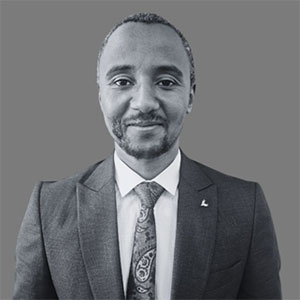 Yonas Kedir
Fighting has resumed in western Tigray, straining the 2022 peace agreement that ended a war that killed hundreds of thousands of people. As the government and armed groups trade blame for the renewed violence, independent journalists trying to report on it are coming under mounting pressure. Reporters covering the conflict and its consequences face abduction, detention, harassment and surveillance, leaving Ethiopians with fewer ways to find out what is happening.
What’s the current situation in Ethiopia?
Ethiopia is facing overlapping humanitarian, political and security crises. Armed conflict continues in Amhara and Oromia states, while Tigray remains scarred by the devastating 2020-2022 war. Displacement continues, territorial disputes remain unresolved and the peace agreement has only been partly implemented.
Armed conflict and insecurity have also spread to Benishangul-Gumuz, Gambela and other parts of Ethiopia. Tensions between the federal government and Tigrayan authorities have intensified. The government alleges that Eritrea is backing the Tigray People’s Liberation Front and other armed groups. Relations with Eritrea are strained, particularly by disputes over Red Sea access and regional security, and Ethiopia is under growing scrutiny over its alleged role in Sudan’s civil war.
The government says Ethiopia faces an anti-federal military movement involving Eritrea, Sudan, the Oromo Liberation Army, Tigray forces and Fano, an Amhara nationalist militia, accusing them of working as an alliance to unseat the federal government. These are highly contested claims, but they shape the government’s framing of the security environment.
Why are journalists being targeted, and why is the pressure escalating?
Journalists are targeted because independent reporting can challenge official narratives and expose abuses, civilian harm and government conduct. When journalists investigate alleged abuses by government forces, authorities present their work as damaging Ethiopia’s national security or serving foreign interests.
There’s a growing tendency to treat independent journalism as a national security threat. Government officials often call on the media to prioritise the national interest and national unity, while treating critical reporting on sensitive issues as inherently harmful to the country.
Amnesty International and Human Rights Watch have documented a deteriorating environment for independent media, including detention, intimidation, restrictions and the use of broad national security and national interest arguments against critical reporting. In this context, legitimate public-interest reporting can be interpreted by authorities or politicians as taking sides.
The pressure has intensified because several politically sensitive issues are converging at the same time, including the political environment, the security situation, the unresolved consequences of the Tigray war, tensions involving Eritrea and Sudan and debates over Ethiopia’s constitutional and political future.
The most recent election was held in a highly contested political environment, with several major opposition parties boycotting the process. This has raised questions about the inclusiveness and broader political legitimacy of the electoral process, particularly in a context where political space for opposition political figures and independent voices remains constrained.
These issues make independent reporting particularly important, but also make journalism on governance and political issues increasingly sensitive.
Why were you detained, and what happened while you were held?
I don’t know for sure who ordered my detention, and nor can I establish the full motive. But the questions I was asked and the circumstances around them strongly suggest my journalistic work was central to what happened.
On 1 August, security personnel took me, assaulted me, blindfolded me and held me for around 24 hours. They questioned me about my work and about Addis Standard’s reporting. While I was detained, security forces raided Addis Standard’s office and seized cameras and other newsroom equipment. They also searched my home and confiscated company and personal equipment. I was released the next day.
For me, this was bigger than myself. The fact that I was questioned about my work and that newsroom equipment was seized raises concerns about the safety of all journalists and the ability of independent media to operate freely.
What conditions do journalists face in Ethiopia, and what are the consequences of the loss of independent reporting?
Journalists in Ethiopia operate in an environment of fear and uncertainty, facing administrative restrictions, arrest, detention, harassment, online intimidation, physical attacks and surveillance. This is particularly true for those in conflict areas, where access can be restricted, sources are often afraid to speak and journalists face pressure from multiple sides, not only federal authorities but also armed and political groups.
This encourages self-censorship. Journalists avoid particular subjects, soften their language or decide not to publish information that could put themselves, colleagues or sources in danger. This leaves people with very limited access to reliable information about decisions that affect their lives.
Independent journalism provides a mechanism for documenting alleged abuses, civilian casualties, displacement and humanitarian needs. A healthy information environment is essential for meaningful public participation, national dialogue and peacebuilding. When independent reporting is weakened, victims and communities lose a public platform to raise concerns. It also becomes harder for people to distinguish verified information from disinformation, propaganda and politically motivated narratives.
What support do Ethiopian journalists and civil society need?
The international community should help build stronger protection and rapid-response mechanisms for when journalists are attacked, detained and threatened, and should press for meaningful accountability for abuses against journalists and media organisations.
International partners should provide legal and institutional support to help media organisations challenge arbitrary licence revocations, unlawful restrictions and other forms of administrative pressure. They should support efforts to strengthen the independence of Ethiopia’s judiciary, so it can protect fundamental rights and provide meaningful remedies when state institutions act unlawfully.
International partners should also give very serious attention to protecting people’s right to organise around their aspirations, grievances and interests, which is essential to peaceful political participation. Expanding civic space can strengthen peace processes and peacebuilding, while suppressing these rights can contribute to the expansion of conflict.
Finally, international partners should continue to monitor Ethiopia’s civic space, engage authorities and support independent investigations. Reporting on abuses shouldn’t be treated as a threat to national interest. It’s part of the public’s right to know. International engagement should also look beyond whether constitutional initiatives, elections and national dialogue processes take place on paper, and assess whether these processes are genuinely inclusive, participatory and protective of fundamental rights.
CIVICUS interviews a wide range of civil society activists, experts and leaders to gather diverse perspectives on civil society action and current issues for publication on its CIVICUS Lens platform. The views expressed in interviews are the interviewees’ and do not necessarily reflect those of CIVICUS. Publication does not imply endorsement of interviewees or the organisations they represent.
GET IN TOUCH
Website
Facebook
Twitter
Yonas Kedir/Facebook
Yonas Kedir/Twitter
SEE ALSO
Ethiopia: Authorities intensify media crackdown ahead of national elections CIVICUS Monitor 31.Jul.2026
Ethiopia: ‘The goal behind the bill is very clear: to control, silence and disable civil society’ CIVICUS Lens | Interview with Yared Hailemariam 28.Jul.2025
Ethiopia: ‘Reconciliation will require robust transitional justice and accountability mechanisms’ CIVICUS Lens | Interview with Henok Ashagray and Hone Mandefro 29.Jan.2025



© Inter Press Service (20260917054840) — All Rights Reserved. Original source: Inter Press Service