56 minutes ago
4
56 minutes ago
4

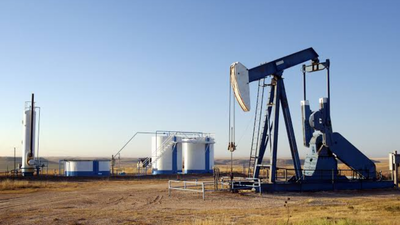
A long-running dispute between a South Texas ranch owner and an oil company over access to a shut-in well took another turn October 1, when a Texas appeals court ruled that state law allows the operator to cross neighboring private land to reach the well for plugging work.
The ruling came from the Texas Thirteenth Court of Appeals in Dierlam v. Allegiant Resources. The court affirmed a Victoria County trial court’s refusal to block the company’s access, according to the Texas Thirteenth Court of Appeals opinion published by Justia.The case involves a 1,604-acre tract in Victoria County that is part of the historic McFaddin Ranch. The ranch has deep roots in South Texas, with the Texas State Historical Association noting that James A.
McFaddin began ranching in Victoria County in 1876. The area later became known as McFaddin Ranch and developed a long association with ranching in the region.At the heart of the dispute is the Remora Oil Unit No. 1, an oil and gas well located on neighboring property known as the Wright Land. Allegiant Resources and its predecessors operated the well from 1996 through 2015, according to the Texas appeals court opinion.
The well has since been shut in, and Allegiant now wants to plug it rather than resume production. The problem is access.
A 2004 injunction complicated access
The ranch owner, Virginia L. Dierlam and McFaddin Ranch LP, obtained a permanent injunction in 2004 preventing well operators from using the ranch to reach the Remora well. That arrangement had nevertheless existed for years before the well was shut in. According to the appellate opinion, Allegiant’s predecessors paid more than $120,000 between 1996 and June 2015 for access to the ranch.
Those payments stopped after the well became inactive.Allegiant became the operator in 2021 and later sought to negotiate new access with the ranch owners. The parties were unable to agree on financial terms, and access was ultimately refused. The company argued that it needed to reach the well because leaving it unplugged could create environmental and regulatory problems. The well is only about 15 to 20 yards from the San Antonio River, according to testimony described in the court’s opinion.
Allegiant also told the trial court that it had considered several alternative routes but found that each would still require crossing the Dierlam property. One proposed route would involve clearing downed trees and low vegetation and was considered the least invasive option.
Court says Texas law permits entry
The legal question before the appeals court was narrower than whether Allegiant could permanently establish an access easement across the ranch.
Instead, the court considered whether the ranch owners were entitled to a temporary injunction preventing Allegiant from entering the property to plug the well. The answer was no.The court relied on Section 89.044 of the Texas Natural Resources Code, which permits the Railroad Commission, its agents, an operator or a nonoperator to enter “the land of another” to plug or replug a well that has not been properly plugged.
The judges rejected the ranch owners’ argument that the provision applies only to land owned by the surface owner associated with the well itself. The court said the Legislature deliberately used the broader phrase “land of another” and did not restrict the access provision to a particular category of landowner.
The decision also noted that the statute contains protections for surface owners, including provisions requiring restoration of land after plugging and limiting actions that could prevent the surface owner from accessing the property.
Environmental concerns became central
Allegiant’s argument was not that it wanted to restart production at the Remora well. Its stated purpose was to plug the inactive well and remove the associated surface equipment. Company personnel told the trial court that an improperly abandoned well could potentially release saltwater or crude oil. They also raised concerns about deteriorating equipment and possible groundwater contamination.The company further argued that failing to complete the work could expose it to regulatory consequences from the Texas Railroad Commission and potentially significant financial losses.
The appeals court did not ultimately decide all of those underlying environmental and financial questions. Its ruling focused on whether Dierlam had demonstrated a probable right to stop the access sought by Allegiant through a temporary injunction.
It concluded that she had not.
What the ruling does and does not mean
The October 1 decision does not amount to a final ruling resolving every aspect of the broader dispute between the ranch owners and Allegiant.
The appellate court affirmed the trial court’s judgment denying Dierlam’s request for a temporary injunction. It also clarified that the trial court had not granted Allegiant’s separate request for a temporary injunction, despite arguments from Dierlam that it had effectively done so.
The ruling instead establishes, at this stage of the litigation, that Section 89.044 gives Allegiant a statutory basis to enter the ranch for the limited purpose of plugging or replugging a well that has not been properly plugged.The case also highlights a broader tension in Texas oil country: private landowners’ rights can collide with the state’s regulatory authority over abandoned and inactive oil and gas wells, particularly when a well sits close to a waterway. For the McFaddin Ranch, the October ruling means the decades-old fight over access to the property now has a significant new chapter. The appellate court’s decision leaves Allegiant with a legal path to reach the shut-in Remora well and carry out the plugging work, despite the permanent injunction that had restricted access more than two decades ago.