8 months ago
52
8 months ago
52


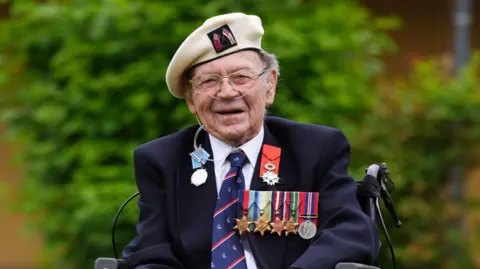 PA Media
Albert Lamond was a teenager when he took part in the 1944 D-Day landings
One of Scotland's last surviving D-Day veterans has died aged 100.
Albert Lamond, from Glasgow, was an 18-year-old signalman aboard HMS Rowley when he took part in the Allied invasion of Normandy on 6 June 1944.
He also served in the lead up to VJ day the following year, helping to evacuate prisoners of war (PoWs) from remote islands in the Pacific and transport them to Australia.
Lamond's family said he "never thought of himself as a hero" and believed he was "just doing his duty".
His nephew, Martin, said: "Not only have Albert's friends and family suffered a great loss, everyone has, even if they never had the pleasure of knowing him.
"Albert carried the memory of those who didn't make it with him throughout his life.
"We are incredibly proud of him and grateful for the time we had."
Lamond was born in Glasgow's east end and joined the Royal Navy in 1943.
He was deployed to the coast of northern France a year later aboard HMS Rowley.
The frigate's role was to act as a first line of defence by circling battleship HMS Warspite and it was expected that the sailors would sacrifice their lives.
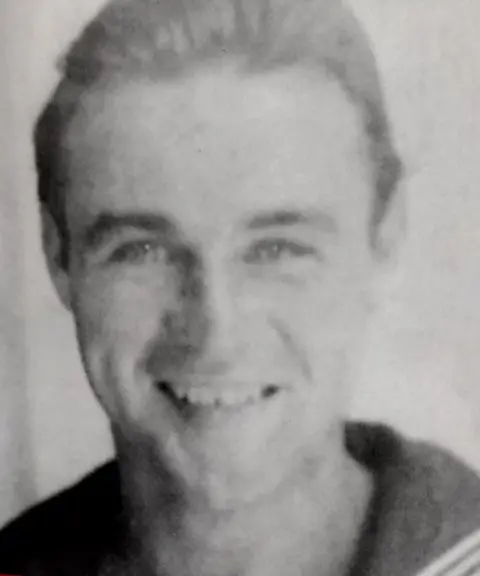 PA Media
Albert joined the Royal Navy in 1943 - aged just 18
He said: "It was horrible. It lives with you forever.
"If we don't pass the stories on, people will forget, and we can't let that happen."
In 1945, he served in the Pacific in the lead up to Japan's surrender.
He described the rescued PoWs as "like living skeletons," but said they were still able to smile.
A short time later, Lamond was part of an American fleet sailing to invade Japan when victory was declared.
"It was the end. It was a relief it was over and it was finished. It was good to get home."
After the war, Lamond worked on the railways and later lived at the McKellar House in Renfrewshire, run by the Erskine veterans' charity.
The organisation's chief executive, wing commander Ian Cumming, said he would never forget Lamond's "cheeky patter".
He said: "Albert represented the very best of his generation.
"He spoke honestly about his service, not to glorify war, but to make sure people understood its cost.
"We won't forget the ever-present twinkle in Albert's eye.
"We were truly privileged to care for and support him in later life."