7 months ago
50
7 months ago
50

Ben GodfreyWest Midlands correspondent

 BBC
BBC
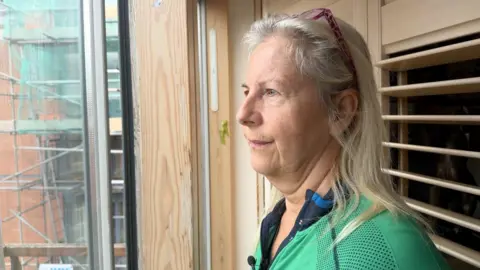
Cathy Robertson has been unable to fully open her windows due to scaffolding
Leaseholders at a Birmingham apartment block have said their homes have become "unliveable" as long running cladding and safety works remain unfinished, in what they call a "horror story".
Residents at the Canal Wharf complex on Waterfront Walk said they had been left surrounded by scaffolding for years, unable to access balconies and had faced multiple issues from water leaks to concerns over structural integrity.
Resident Cathy Robertson said she has been unable to fully open her windows for months because scaffolding seals off her balcony.
A spokesperson for manager Centrick said remediation works relating to fire safety were underway, and a contractor was on site.
It said the contractor was also completing façade and structural fire safety works, and cladding elements had been completed.
Balcony remediation was continuing through design and regulatory approval stages, it added.
Robertson claimed that water had been leaking through her ceiling, with "repeated" reports to the managing agent still unresolved.
"We've effectively been living on a construction site for many years," she said.
"These were luxury apartments. We pay nearly £5,000 a year in service charges. It's just dreadful."
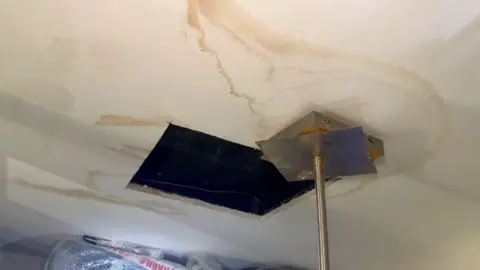
Cathy Robertson said water had been leaking through her ceiling
The block opened in 2006, marketed as 155 premium apartments overlooking Gas Street Basin and the Mailbox.
Within a decade of opening, residents claim they were told the building required a new roof at a cost of about £450,000. They said this was passed onto leaseholders through a 62% rise in service charges.
After the Grenfell Tower disaster the development was identified for cladding remediation in 2021.
But in April 2023 contractor Hedson Construction collapsed into liquidation, leaving what residents believed to be about 20% of the work incomplete.
They said they were assured the delay would be temporary, but the site has remained fully scaffolded ever since.
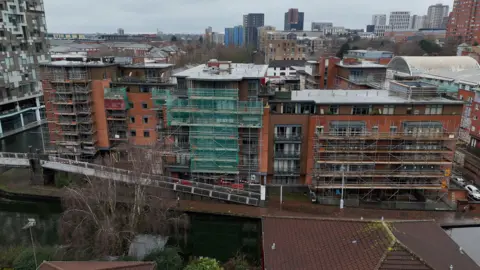
The block opened in 2006
"We're all distraught. It feels like a never ending horror story," said leaseholder Keri Remes.
"Summer 2022 was when we were told it would be finished."
The block is now managed by Centrick, which took over in December 2024 from Pennycuick Collins.
But leaseholders said communication remained one of their biggest frustrations.
"It's like they go into hiding when you notify them on the portal," said Robertson.
"You can be on hold for half an hour waiting for a call back and it never comes."
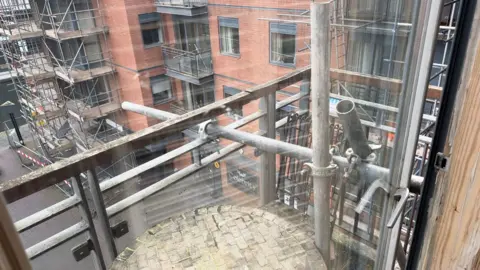
Centrick said contractors were on site carrying out work
Residents said they had repeatedly asked for fire safety documentation such as an EWS1 form, essential for mortgage valuations and property sales.
They also claimed they had not been given access to full accounts, despite believing around £2m of service charge money had been spent on the development since 2021.
Centrick said an EWS1 certificate will be issued by a qualified fire engineer once all remediation works were fully completed and certified.
It added that it was working with Persimmon Homes, which is funding the project, and with the Canal Wharf Management Company, with resident safety as the priority.
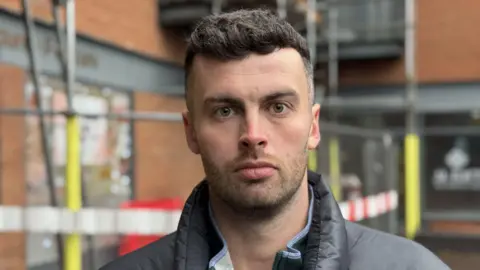
Cricketer Dominic Sibley said the situation was "frustrating"
Cricketer Dominic Sibley, who plays for Surrey and is a former England international, owns an apartment at the site.
"We want to find out what's happening, where the money is going," he said.
"It's extremely frustrating, and there's a big group of leaseholders in really tough situations."
The issues at Canal Wharf mirror a national picture.
The Grenfell Tower fire in 2017 exposed the widespread use of combustible cladding systems across England, and government testing later revealed that between 9,000 and 12,000 medium and high rise buildings may require some form of remediation, far more than initially understood.
Despite billions in government funding and years of scrutiny, about half of all affected buildings had yet to begin remediation eight years on, with thousands still not formally identified. The slow progress has left many residents across the country unable to sell their homes, facing soaring insurance costs, and dependent on interim fire safety measures.
Meanwhile, the West Midlands Combined Authority has launched a regional project to accelerate the removal of combustible cladding from residential buildings above 11 metres in height.
It published an official report last July, where it was suggested that there were 157 'unsafe' residential buildings yet to see the start of cladding remediation work.