1 hour ago
4
1 hour ago
4

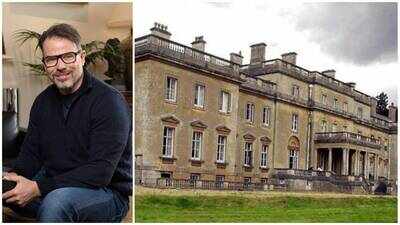
Chris Rokos gets approval for a major solar farm at his historic Savernake Estate.
Hedge fund billionaire Chris Rokos has secured planning approval to build a major solar farm on his Savernake Estate in Wiltshire, overcoming objections from neighbours who warned the project could damage the historic landscape around his Grade I-listed mansion, Tottenham House.According to SWNS, representatives of Chris Rokos submitted plans to Wiltshire Council for a solar farm covering around 40 acres of his 4,500-acre Savernake Estate. The project is intended to provide Tottenham House and its surrounding buildings with a more sustainable source of electricity and water.Rokos, who founded hedge fund firm Rokos Capital Management, has been carrying out an extensive renovation of the 100-bedroom Tottenham House in Marlborough, Wiltshire.The planning documents state that the renewable energy project is designed to help secure the estate's “long term and sustainable future” by providing “a sustainable form of power and water to enable its functional operation.”Wiltshire Council has now partially discharged a planning condition relating to construction and environmental management, allowing work on the solar array itself to move forward.
Neighbours raised concerns over historic landscape
The solar farm proposal had faced opposition from several neighbours and the local parish council, despite broader support for the restoration of Tottenham House.
The proposed site is located on the northern boundary of the estate and is currently used as pasture for dairy cattle and for producing silage. It is also close to a public footpath linking the hamlet of Durley with St Katharine's Church and primary school.Opponents argued that the development could have a significant impact on the historic character of the area, which lies within a protected landscape.Nearby resident Richard Frics welcomed the restoration of Tottenham House but objected specifically to the solar installation.He argued that the panels would occupy more than one hectare and would be located within an Area of Outstanding Natural Beauty (AONB), as well as a Grade II* Registered Park and Garden associated with a Capability Brown landscape.Frics also raised concerns about the potential impact on the nearby Grade II* listed stable block, claiming that glare from the solar panels could significantly alter its outlook.He described the development as a threat to the “special qualities” of the heritage landscape and warned it could establish an undesirable precedent for similar planning applications.Another neighbour, Mark Colquhoun, described the wider restoration project as “an exemplary project” but called the proposed solar farm a “substantial visual and historical intrusion.”
Solar panels expected to generate 794,600 kWh of electricity annually
Once operational, the ground-mounted solar panels are expected to generate approximately 794,600 kilowatt hours of electricity every year.Around 44% of the electricity generated is expected to be consumed on the estate, with the remaining power exported to the local electricity grid.Planning officials concluded that the benefits of the renewable energy project outweighed the potential harm to the heritage setting.The solar panels will be screened by existing woodland and additional planting intended to reduce their visibility. They will also be installed using screw piles rather than permanent concrete foundations, meaning the array could potentially be removed in the future without leaving substantial permanent structures.The land will continue to have an agricultural function, with livestock grazing able to take place around the solar panels.
Tottenham House restoration forms part of wider estate development
The solar farm is part of a broader package of development associated with the restoration and future use of Tottenham House.The plans also include a large water storage lagoon, a new mains water connection and landscape improvements across the estate.However, while the solar array has cleared a key planning hurdle, further environmental management details still need to be approved before some of the other elements of the wider project can proceed.Tottenham House is one of Wiltshire's most significant historic properties. The Grade I-listed mansion has undergone extensive restoration after previously appearing on the Heritage at Risk register.
Savernake Estate sold for £11.25 million in 2014
The Savernake Estate has a history stretching back centuries and was once a Royal Hunting Forest dating to the Norman Conquest.The estate was formerly owned by the Earl of Cardigan, David Brudenell-Bruce. In 2014, he sold the 4,500-acre Savernake Estate to a developer for £11.25 million, ending around 200 years of ownership by the same family.Rokos's plans for Tottenham House and the wider estate now combine historic restoration with renewable energy infrastructure, although the solar farm's impact on the protected landscape remains a point of contention among some local residents.