2 hours ago
4
2 hours ago
4

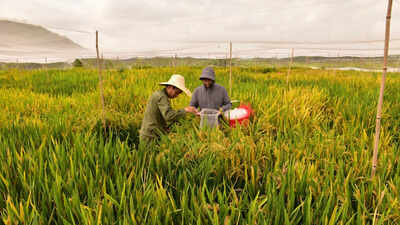
China achieves 99% hybrid rice seed cloning with HUAXU gene, cuts annual seed costs
China’s new hybrid rice can preserve its high-yield traits across generations, potentially allowing farmers to replant seeds instead of buying new ones every year.Scientists at the China National Rice Research Institute in Hangzhou have developed a self-cloning hybrid rice system that maintains superior crop yields while achieving over 99 per cent cloning efficiency.
Led by researcher and professor Wang Kejian, the study was published in the academic journal Vita on July 21, with additional details reported by the Global Times.The breakthrough targets a long-standing barrier in modern agriculture known as hybrid vigour. Hybrid rice produces 10 to 30 per cent higher yields than standard varieties. However, when farmers harvest and replant seeds from conventional two-line or three-line hybrid crops, the genetic traits separate in the next generation, causing the yield advantage to disappear.
As a result, growers are forced to purchase fresh hybrid seeds every single season.
How the HUAXU gene unlocks seed cloning
Wang's research team began addressing this issue in 2013 by focusing on synthetic apomixis, a natural plant process where seeds form without fertilisation, creating exact genetic copies of the parent plant.The breakthrough relies on an endogenous rice gene called HUAXU. When expressed in the egg cells of hybrid rice, HUAXU triggers parthenogenesis, prompting the egg cell to grow into an embryo without needing male fertilisation.
By combining this mechanism with a clonal gamete strategy, the team created modified rice lines known as Fix8.Unlike earlier gene-editing approaches that required introducing foreign genes, HUAXU is a naturally occurring gene within rice. This distinction simplifies regulatory reviews and commercial deployment.In large-scale field tests across different rice varieties, multiple generations, and varying weather conditions, the Fix8 lines maintained cloning efficiency above 99 per cent alongside normal fertility and crop yields.
In theory, obtaining a single hybrid seed would allow a farmer to cultivate high-yield rice continuously without buying new stock every year.Earlier experiments by the team in 2017 reached only 5 per cent cloning efficiency, while rival research groups later achieved roughly 95 per cent using complex gene mutations. Reaching the 99 per cent mark satisfies the threshold required for commercial application, fulfilling a long-sought goal in plant breeding often referred to as the "one-line hybrid rice" concept.
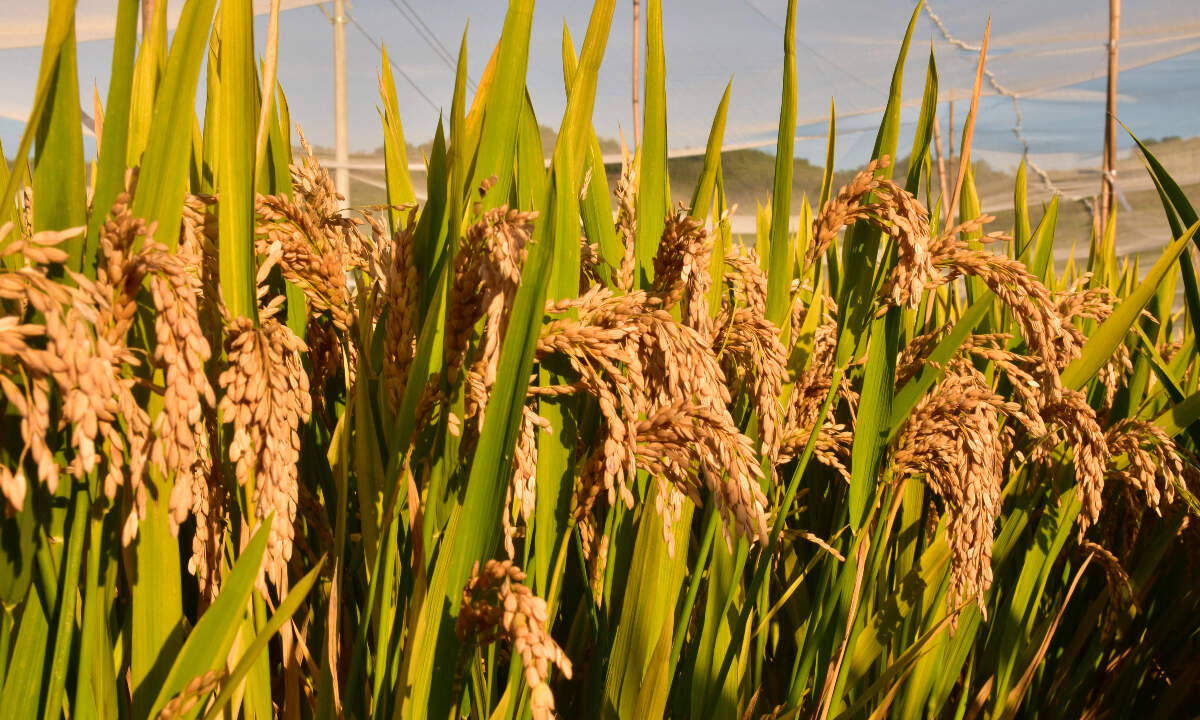
Chinese scientists make a major breakthrough in hybrid rice breeding with the development of "clonal hybrid rice" (Photo: Courtesy of Wang Kejian)
Slash in seed expenses to aid global farms
High production costs have historically limited the spread of hybrid crops. Hybrid rice currently accounts for about 50 per cent of rice fields in China, but covers just 5 per cent of global rice acreage.Producing hybrid seeds through traditional cross-breeding is labour-intensive, costing 10 to 20 times more than conventional seeds even before factoring in processing, storage, and transport expenses."Producing hybrid seeds costs 10 to 20 times more than conventional seeds, making high-yield hybrid rice unaffordable for many developing regions, especially African countries where higher yields are most needed," Wang told the Global Times.The new cloning technique drastically reduces those expenses. According to data provided by Wang’s team, seed prices for the Fix8 lines could drop to between 2 and 5 yuan per half-kilogram. Standard hybrid seeds in China currently sell for 20 to 100 yuan per half-kilogram.Expanding global hybrid rice adoption from 5 per cent to 25 per cent of farmland would significantly increase world grain supplies. Removing the need for annual seed production also provides plant breeders with greater freedom to introduce genetic diversity, helping crops withstand climate stress, diseases, and extreme weather.
Supporting national and global food security
The development carries major implications for China's agricultural policy and global grain markets. China supports nearly one-fifth of the world's population using less than 9 per cent of global arable land, with hybrid rice serving as a primary driver of that agricultural output.Official statistics show China's total grain output has remained stable at over 700 billion kilograms for two consecutive years.
That figure sits well above the internationally recognized safety baseline of 400 kilograms per capita.By eliminating the need for yearly hybrid seed production, the new one-line system offers a permanent way to lock in high yields, lowering production costs for farmers while strengthening long-term food self-sufficiency.
Technical advances in seed propagation
Traditional hybrid rice cultivation relies heavily on multi-line breeding systems, primarily the three-line and two-line methods.
These techniques require specialized cross-breeding between male sterile lines and restorer lines to yield viable hybrid seeds. Because this labor-intensive process must be repeated every season, seed purity and quality control remain constant challenges for commercial producers.The development of synthetic apomixis using the HUAXU gene fundamentally changes this dynamic. By inducing parthenogenesis directly within unfertilized egg cells, the plant creates haploid offspring that carry the exact genetic material of the mother plant.Cloning efficiency acts as the primary benchmark for measuring how reliably a crop retains its hybrid vigor. While earlier efforts struggled to maintain high success rates without compromising overall plant fertility, crossing the 99 percent threshold in field trials confirms that clonal seeds can be multiplied across multiple generations without losing productivity or crop resilience.