
 4 months ago
52
4 months ago
52


 BBC
BBC
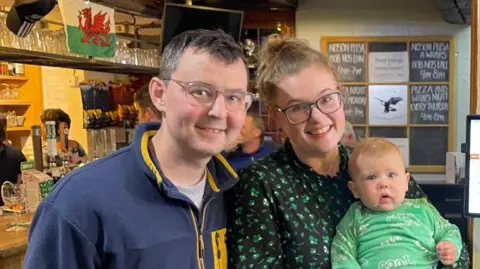
Huw was given precious time with wife Cadi and son Idris because of the drug
When Huw Jones was diagnosed with a rare and aggressive form of cancer, he was about to become a dad.
He had cholangiocarcinoma - a bile duct cancer - but it had reached Stage 4, meaning it was no longer curable, and the best he could hope for was treatment that would extend his life.
The trial drug Zanidatamab, which is prescribed when surgery is no longer an option, gave him that precious time, and allowed him to see son Idris turn one.
Before his death in February, aged 33, he had campaigned for it to be made available on the NHS.
Clinical trials suggest it can triple life expectancy for people with the cancer from around six more months to 18 months.
"Now other families can get that help too," said Huw's dad Gareth.
"It is very important for the patients suffering from this cancer that this is available.
"The drug brought a glimmer of hope to Huw."
It was in September 2024 that Huw, from Llanuwchllyn, Gwynedd, first realised something was wrong while swimming in Llyn Tegid.
He felt a pain in his abdomen, so visited a doctor, with tests confirming he had cholangiocarcinoma.
By this point it had spread to his lungs.
"Huw was extremely lucky to be able to get Zanidatamab through doctors in London," Gareth added.
"When Huw was diagnosed the drug wasn't available on the health service, we had to find it ourselves.
"The drug made a massive difference to him, his tumours shrunk and his symptoms improved almost immediately."
It allowed him precious time with wife Cadi and Idris during his first months.
While he knew it wouldn't cure him, the drug gave Huw something to be positive about and enabled him to look a short distance into the future with hope, according to his dad.
"Hope is the best way of describing it," Gareth added.
"Huw had so much hope and he was looking forward to getting better and that's what kept him going for so long."
Huw died in February, 17 months after being diagnosed.
 Family Picture
Huw Jones was about to be a dad when he was diagnosed, and was given precious time with his new son
What is cholangiocarcinoma?
Cholangiocarcinoma is a bile duct cancer.
The bile ducts are small tubes that connect different organs, including the liver and gall bladder, and are part of the digestive system.
How serious bile duct cancer is depends on where it is in the bile ducts, how big it is, if it has spread, and your general health.
Symptoms can be hard to spot, but can include:
- Your eyes or skin turning yellow
- Itchy skin
- Darker pee and paler poo than usual
- Loss of appetite or losing weight without trying
- Feeling tired with no energy
- Feeling or being sick
- Pain in your tummy
They look at things such as how well the medicine works, how safe it is, and its cost-effectiveness - how well it works in relation to how much it costs the NHS.
NICE's guidance applies to Wales and England.
Health boards in Wales are usually expected to have a drug available for prescribing within 60 days of draft guidance that recommends its use.
 Family Picture
Huw and Gareth took part in a cycling challenge to raise money for a cancer charity
Also known as Ziihera, Zanidatamab is an antibody treatment for patients with a higher-than-normal level of a protein called HER2, which stimulates tumours to grow.
It works by activating the immune system to remove and kill the cancer cells and reduces the levels of HER2, which prevents the cancer from growing.
Clinical trials suggest the treatment can almost triple life expectancy for patients compared with current treatment.
NICE estimates about 65 patients a year will benefit from treatment, which is given by an intravenous drip once every two weeks.
Director of medicines evaluation at NICE Helen Knight said: "Patients and clinical experts involved in the appraisal told us how this treatment would make a huge difference by extending people's lives and improving their quality of life – something that was not always possible with chemotherapy."


