1 hour ago
5
1 hour ago
5

 Image source, Kevin Shoesmith/BBC
Retired British Steel worker Phil Tennyson pictured at Scunthorpe's Jubilee Park with wife Jenna and their granddaughter
ByKevin Shoesmith
in Scunthorpe
Standing in Scunthorpe's Jubilee Park, Phil Tennyson points to the skyline and a cooling tower at British Steel, where he worked for 38 years.
On a sunny afternoon, Phil and his wife, Jenna, have brought their two-year-old granddaughter to play.
The drab, grey tower poking out above the treetops in the distance sits in contrast to the play equipment brought to life by primary colours.
Phil is digesting the news that the British Steel has been nationalised; taken into public ownership in a move the government said would protect jobs and safeguard "a vital national capability".
"It will help support the future for our children and our grandchildren," says Phil, pulling his granddaughter's floppy hat further down her face to protect it from the midday sun.
"But I do think it should never have been privatised in the first place."
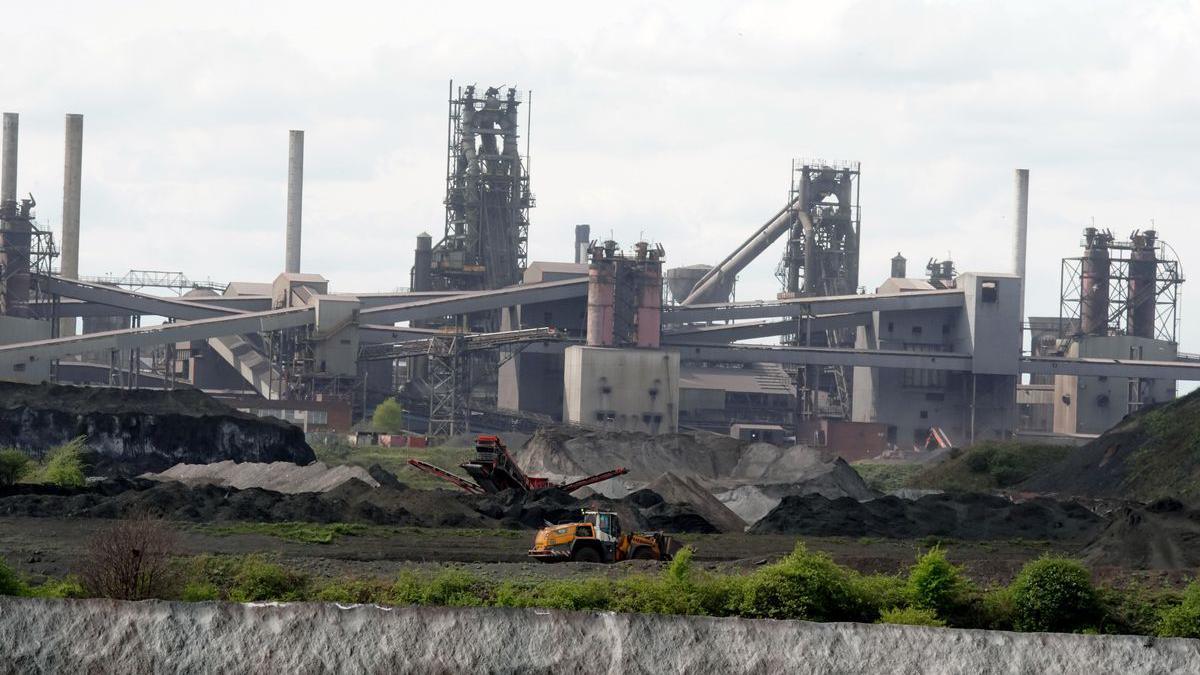 Image source, PA Media
The site in Scunthorpe has been producing steel since 1890
Many in this Lincolnshire town welcome what they perceive to be a lifeline.
"It's a mucky place and hard work," says Phil. "But those works have given a lot of people around here a good living over many, many years."
Last year, the UK government took control of British Steel's operations in Scunthorpe, though it was still owned by China's Jingye Group.
Nationalisation gives the government the power and freedom to decide on the future of the plant, while keeping its blast furnaces going.
Phil, though pleased with the decision, is guarded.
"I don't know how it's going to remain profitable when it's competing against cheaper, foreign steel," he says.
"The industry is nothing like it was. Those days are gone. In the early 1970s, 22,000 people were employed in the works. Now, it's less than 3,000, although plenty of others in the supply chain, shops and so on rely on it."
 Image source, Kevin Shoesmith/BBC
Robert Smith says Scunthorpe "would be dead without its steelworks"
Robert Smith, 61, who works in traffic management, says nationalisation of British Steel "had to be done".
"We need British Steel for defence," he says.
The government wanted to keep Scunthorpe's last two remaining blast furnaces open as they are the UK's last remaining source of "virgin", or new, steel directly produced from iron ore.
If they closed, the UK would become the only member of the G7 group of leading economies without the ability to make it.
Walking along a path in front of nearby Lincoln Gardens Primary School is Pat Stephenson, 83, and Brenda Ovenden, 72.
Pat worked in the offices at the steelworks in the 1950s and 60s
"I don't know if nationalising British Steel will work," she says. "Steel is still important to Scunthorpe but people have got used to it not being as big as it was."
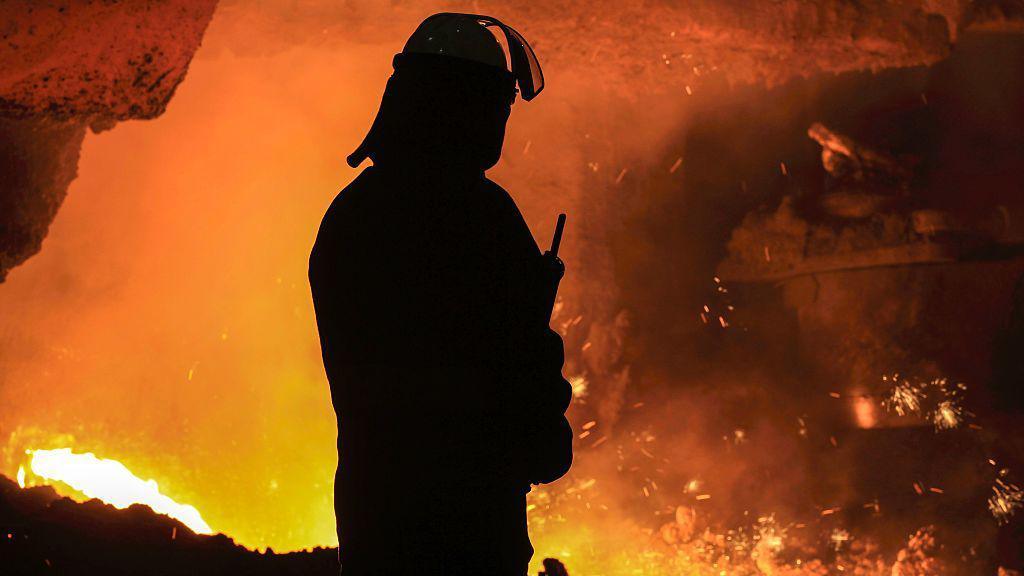 Image source, Getty Images
In March, the National Audit Office stated the Scunthorpe steelworks was costing the government about £1.3m a day
Bradley Woodley, 31, is sitting on a bench next to the park with his 12-year-old son.
"Quite a few of my mates work in the steelworks," says Bradley. "So it's good news that it's being brought under the control of the government.
"It's about protecting the industry, as well as Scunthorpe, for future generations like my son."
His son says he wants to be a footballer when he grows up but has not ruled out a job in steel
"It's hard graft though," laughs his dad.
A couple of miles away, towards the town centre, Tym Wrona, 20, a Durham University physics student home for summer, is on his way to meet a friend.
"Steel is everywhere in Scunthorpe," he says. "It's a huge part of the town.
"The government's decision to nationalise [British Steel] is a good thing. It will protect local jobs."
 Image source, Kevin Shoesmith/BBC
Student Tym Wrona supports the nationalisation and says "steel is everywhere" in Scunthorpe
Shirley Armer, 60, walking her dog, goes further.
She describes it as "fantastic news".
"We're unique," says Shirley. "We make virgin steel - and it's high quality."
She believes the government had no choice but to nationalise.
"The UK can't afford to lose its steel industry," she says. "I support nationalising key industries and services but it needs to be done with real intelligence and thought to make it work for the people. We will see what happens."
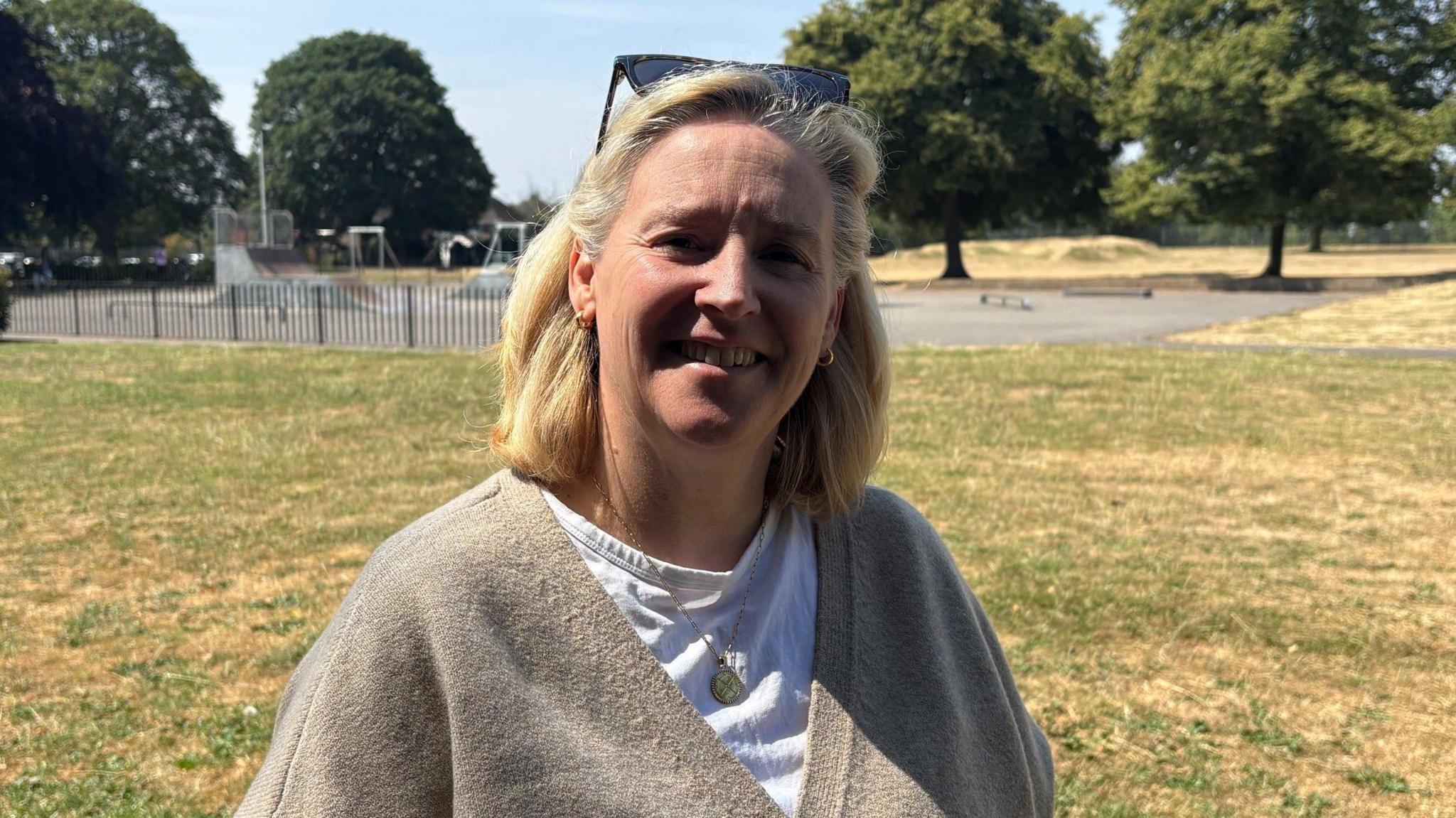 Image source, Kevin Shoesmith/BBC
Shirley Armer applauds the government's decision