6 hours ago
2
6 hours ago
2

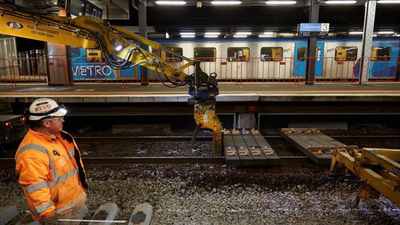
Australia began experimenting with railway sleepers made from recycled plastic in 2015, turning material that might otherwise have gone to landfill into a component designed to sit beneath railway tracks.
Developed by Integrated Recycling with researchers at Monash University's Institute of Railway Technology, the Duratrack sleeper is made from about 85% post-consumer plastic waste, including agricultural plastics, polystyrene and other difficult-to-recycle materials. After years of laboratory research and smaller railway trials, the sleepers reached Melbourne's metropolitan network in 2019, when about 190 were installed at Richmond station.
Further testing followed at Tottenham Junction, where researchers monitored plastic and timber sleepers under real railway conditions. The sleepers were eventually approved for specified low-speed applications and have a potential lifespan of up to 50 years.
Australia's plastic-to-railway experiment
The Duratrack project grew from an attempt to address two problems at the same time: the need for railway sleepers and the growing volume of plastic waste requiring new uses.
Monash University's Institute of Railway Technology worked with Victorian manufacturer Integrated Recycling to develop a composite sleeper that could replace conventional materials such as timber. Research into the application of recycled plastic sleepers began in 2015, with government-backed research and development helping the technology move from development towards railway trials.The resulting Duratrack sleeper contains about 85% post-consumer plastic waste.
The material includes agricultural plastics such as silage wrap and twine, as well as other waste streams including polystyrene. These materials were selected because they could otherwise have ended up in landfill or required other forms of disposal.Instead of treating the plastic as waste, the project turned it into a structural railway product.
Researchers had to prove plastic could support railway tracks
Using recycled plastic in a railway sleeper required more than demonstrating that the material could be moulded into the right shape.Sleepers sit beneath rails and help transfer loads into the track structure. They must therefore withstand repeated forces while maintaining the geometry and stability of the railway.Monash researchers carried out laboratory testing of Duratrack to examine properties including its elastic modulus, maximum elastic strain limit and response to different strain rates. They also investigated load transfer, track stability, noise and vibration.
Researchers developed a finite-element model using the measured properties to examine how factors such as track gauge and sleeper dimensions affected the material's behaviour.Before the sleepers reached Melbourne's metropolitan railway network, Duratrack had also been trialled on selected tourist and heritage railways in Victoria, including Puffing Billy, Walhalla Goldfields Railway and Victorian Goldfields Railway.These earlier trials provided experience with the material before it was subjected to testing on a metropolitan network.
Nearly 200 plastic sleepers went under Melbourne trains
A major step came in June 2019, when Duratrack sleepers were installed at Richmond railway station in Melbourne.The first metropolitan trial involved about 190 sleepers as part of an 18-month trial. The Victorian government described the installation as the first use of the recycled-plastic sleepers on Melbourne's metropolitan train network.The sleepers were manufactured in Mildura by Integrated Recycling and contained recycled material sourced in Australia. The project was supported by Victorian government funding through Sustainability Victoria, with the research and development work led by Integrated Recycling and Monash University's Institute of Railway Technology.The Richmond installation was significant because it moved Duratrack beyond specialist heritage railways and into a working metropolitan railway environment.The government said the recycled sleepers had a potential lifespan of up to 50 years, while also describing them as requiring less maintenance than traditional timber sleepers.The 50-year figure is a potential service-life estimate, rather than evidence that the sleepers have already operated for five decades.
The sleepers were tested alongside timber
Researchers then carried out another in-track trial to examine how the recycled sleepers behaved under railway conditions.At Tottenham Junction in West Footscray, 25 Duratrack sleepers were installed in the Australian Rail Track Corporation network, interspersed with timber sleepers in a one-in-five arrangement. This allowed researchers to monitor the recycled sleepers within a track containing conventional timber sleepers.The research team monitored the sleepers over a 12-month period. Regular visual inspections were conducted, while researchers measured factors including strain, noise and vibration.
The aim was to understand how the plastic composite behaved in actual track conditions and to improve the design procedures used for the sleepers.The results helped demonstrate that Duratrack could function as an alternative to timber sleepers for low-speed railway applications.That distinction matters because the product was not approved as a universal replacement for every type of railway sleeper. Its approval was focused on applications where its performance had been demonstrated.
Plastic sleepers received approval for low-speed rail
The research eventually helped create a pathway for Duratrack to move into real railway projects.The sleeper was type-approved for low-speed siding and yard applications on the Metro Trains Melbourne and V/Line networks. The research also contributed to the development of AS1085.22, an Australian Standard for alternative material sleepers, establishing a framework for railway sleepers made from materials other than conventional timber, concrete and steel.Duratrack sleepers subsequently appeared at locations including Richmond Station, Wyndham Vale stabling yard and Tottenham Station. The technology was also used in railway upgrade projects, with planned installations on the Shepparton and Warrnambool line upgrades.By this stage, the project had moved well beyond the question of whether plastic could technically be turned into a sleeper. The focus had shifted towards how the material could be incorporated into Australia's railway infrastructure.
One kilometre of track can divert 64 tonnes of plastic
The environmental calculation provides another striking part of the project.Sustainability Victoria says that approximately 1,500 Duratrack sleepers, enough for about one kilometre of track, can divert around 64 tonnes of recyclable plastic from landfill.The sleepers are also designed with a circular-economy principle in mind. Sustainability Victoria says the composite sleepers can be recycled at the end of their service life and turned into new sleepers.The potential lifespan is another part of the argument for the material. Integrated Recycling has indicated that composite sleepers can last up to 50 years, while Victorian government material has described the lifespan as potentially three times that of traditional timber sleepers.The benefit, therefore, is not simply that plastic waste gets another use. The material is being converted into an infrastructure component intended to remain in service for decades.
The technology moved towards larger-scale production
As the railway trials progressed, Victoria also invested in increasing production capacity.In 2021, Integrated Recycling received funding through the Recycling Modernisation Fund to install a modular production line for Duratrack sleepers at its Mildura facility. The project was intended to allow the company to process an additional 1,600 tonnes of plastic and produce up to 35,000 sleepers a year.The expansion showed that the project was no longer being treated solely as a small research experiment.
The aim was to create enough manufacturing capacity for recycled-plastic sleepers to become a practical option for railway infrastructure projects.The approach also offers a way of creating a domestic market for difficult-to-recycle plastics. Sustainability Victoria has identified recycled composite sleepers as a significant potential volume-use application for waste plastics in transport infrastructure.
From discarded plastic to railway infrastructure
What began as research in 2015 has therefore developed into a railway product that has undergone laboratory testing, heritage railway trials and testing on working metropolitan and mainline infrastructure.Duratrack is made from about 85% post-consumer recycled plastic, has been approved for specified low-speed railway applications and has been installed at multiple locations in Victoria.The potential lifespan of up to 50 years gives the technology an unusual long-term proposition, although that remains a projected lifespan rather than a result demonstrated through 50 years of operation.For every kilometre of track using roughly 1,500 of the sleepers, about 64 tonnes of recyclable plastic can be diverted from landfill.