1 hour ago
3
1 hour ago
3

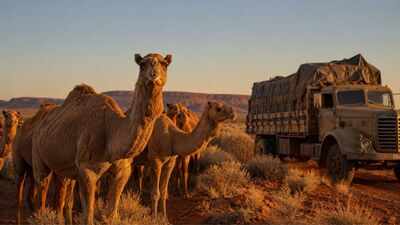
Australia’s camel population is difficult to count, partly because the animals are scattered across an immense stretch of desert and semi-desert country. Estimates have placed the feral herd anywhere from about 300,000 to one million, depending on the year and the method used to survey it.
Their presence is a legacy of a very different Australia, when dromedaries were brought in to carry supplies and equipment across the inland. Once trucks replaced them, many were released and adapted to life in the outback. Now their isolation has taken on an unexpected significance.Australian camels appear to have avoided exposure to MERS, a disease established among camel herds in parts of the Middle East. That history has helped create interest among overseas breeders, even though exporting the animals remains a small and expensive business.
The same camels Australia manages as pests may also hold useful breeding value.
Australia’s outback is home to one of the world’s largest camel populations
Estimates have varied widely, partly because the animals occupy an enormous area of desert and semi-desert country. As reported by The Pew Charitable Trusts, numbers were estimated at as many as 1 million, while large-scale control programmes have since reduced the population substantially. More recent estimates have still ranged from roughly 300,000 to one million.
Australia’s feral dromedaries are spread across millions of square kilometres, moving between remote water sources and grazing areas. Counting them from the ground is hardly practical, and even aerial surveys have to cover huge distances. For land managers, the population is not simply a curiosity. Camels can damage fencing, congregate around water points and consume substantial quantities of vegetation. Their grazing can extend across a wide variety of plant species, placing additional pressure on already dry landscapes.
How Australia’s working camels became a wild population
The first camels arrived as working animals during the nineteenth century when they were particularly useful in the interior, where their ability to travel long distances without water made them suited to jobs that were difficult for horses.Dromedaries became part of the infrastructure of inland Australia, carrying provisions and equipment for expeditions, construction projects and transport routes. Motor vehicles gradually replaced camel teams, leaving large numbers of animals without a useful role.
Some were released rather than kept at considerable expense, and once they were free, the interior provided conditions in which they could establish themselves remarkably well.
With little natural predation and abundant native vegetation in many areas, their numbers rose. A population that had begun as a transport solution became a feral one.
Why Australia’s feral camels have a different disease history
Middle East respiratory syndrome, commonly known as MERS, is a coronavirus associated with dromedary camels and human infection.
The virus is well established among camel populations in parts of the Arabian Peninsula and elsewhere. Investigations of camels in affected regions have found very high levels of exposure, including evidence of previous infection in a large proportion of tested animals.Australian dromedaries appear to have followed a very different path. The University of Western Australia 2015 surveillance study, titled ‘Absence of MERS-CoV antibodies in feral camels in Australia: Implications for the pathogen's origin and spread’ revealed that examining feral camels found no serological evidence of MERS infection in the animals tested.That finding needs to be kept in proportion. It concerns a particular disease and a particular body of surveillance work. It does not mean Australian camels are free from every infectious disease, nor does it make an individual animal automatically safe or healthy. The Australian population descends from camels brought to the country more than a century ago. With little subsequent introduction of new animals from overseas, the herd has remained unusually isolated from camel populations in areas where MERS has circulated.
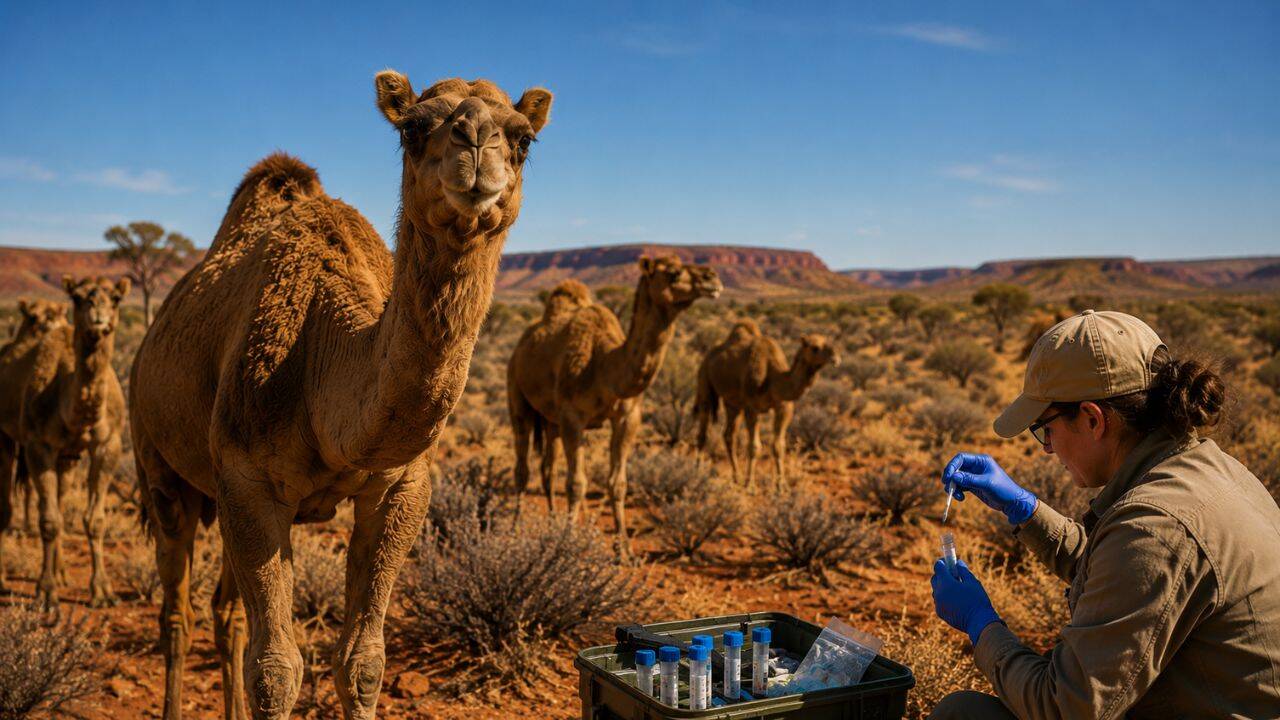
Why Gulf breeders have looked towards Australia
Camel breeding and racing remain important in parts of the Middle East, where animals with desirable bloodlines can command considerable attention. Importing Australian camels offers access to animals from a population with a different genetic and disease history. Transporting a feral camel is not a simple matter of loading it onto a lorry.Animals have to be mustered, handled, moved considerable distances and prepared for export.
Air freight adds another layer of expense. Australian camels are most commercially attractive where the buyer is paying for something beyond the animal itself, such as breeding potential, particular bloodlines or access to a population with a different disease history.
The export market remains small
The idea of Australia supplying the Gulf with premium breeding camels sounds large when set against the size of the feral population. In practice, the business is much smaller.
Only limited numbers have been exported as live animals, while Australian camel meat has found a more established market overseas. As reported by The Straits Times, by August 2026, reports indicated that 68 whole camels had been sent abroad that year, with Malaysia and Indonesia among the destinations.Camel products have also developed a domestic market. Camel milk, for example, is sold by specialist producers at prices far above ordinary dairy milk.
Some businesses combine farming with tourism or accommodation, spreading their income across several activities rather than relying on milk alone.
A pest control problem with a commercial angle
Australia has spent years trying to reduce feral camel numbers because of the damage they can cause to vegetation, infrastructure and water sources. At the same time, a small overseas market sees potential value in animals that emerged from precisely that unmanaged population.
Most feral camels are still treated as a population-control issue rather than as a reservoir of valuable breeding genetics. A helicopter remains a more familiar part of camel management than an export crate.There may be commercial opportunities in the population, particularly if disease status, genetics and breeding qualities can be matched with buyers willing to absorb the cost of capture and transport. But the existence of a million or even several hundred thousand camels does not by itself create a viable export industry.Australia’s unusual camel herd was created by an old transport system, abandoned when machinery made it obsolete. More than a century later, the descendants of those working animals have acquired a different kind of value. Their isolation, once simply a consequence of geography, is now one of the reasons overseas breeders are interested in them.