2 hours ago
3
2 hours ago
3

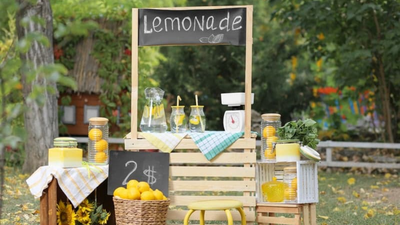
An eight-year-old girl from Fairfax, California, turned a classic childhood activity into a determined fundraising campaign after one photograph showed her the reality of modern child slavery.
Vivienne Harr started a roadside lemonade stand on 25 June 2012. Her goal was to raise $100,000 for groups working to fight slavery. She reached that target in less than six months, but she refused to stop. Instead, she kept the stand open every day for a full year. Her campaign began after she saw a photograph by documentary photographer Lisa Kristine. The image, titled "Brothers Carrying Stone, Nepal", showed two young boys forced to carry heavy granite slabs with straps around their foreheads.
The picture deeply affected Harr. Until then, she had believed forced labor was a thing of the past. "I thought slavery ended with Abraham Lincoln," Harr wrote on the Make a Stand website. "I was wrong about that. I learned that slavery is everywhere and even here in America. I wanted to do something, because compassion is not compassion without action." Wanting to help, Harr built a small wooden stand in a local park in her hometown of Fairfax, in Marin County, California.
Instead of setting a price for each cup, she asked customers to "pay what is in your heart".
A daily commitment in California
The stand quickly gained attention. Harr marked each day on a chalk tally on the front of the wooden stand. Every morning, she updated the number to show how many days in a row she had been making and selling lemonade. People in the area were moved by her commitment and began telling others about the campaign. Her father, Eric Harr, used social media to share updates about her progress each day.
The story soon began attracting attention across the country.
The campaign grew even more after New York Times columnist Nicholas Kristof shared her story online on her 52nd day. More than $18,000 in donations came in during the next 48 hours. By day 56, total donations had passed $30,000. Harr kept following her daily routine as the weather changed and the new school term began. She continued selling lemonade even after the summer had ended.
Reaching the initial milestone
In December 2012, her campaign received major public attention when then-New York City Mayor Michael Bloomberg invited her to bring her lemonade stand to Times Square. On her 173rd straight day of selling lemonade, Harr officially passed her $100,000 goal. Total donations reached $101,320. The money went to Not For Sale, a California-based nonprofit that works to fight child slavery and human trafficking around the world.
Even after reaching the goal she had set, Harr did not want the campaign to end. "My parents said, 'Honey, you did it! You're done!'" Harr recalled in an interview with the My Hero Project. "I said, 'Is child slavery done?' They said 'No.' I said, 'Then I'm not done.'" Harr continued running the stand for 365 straight days. She made fresh lemonade every morning and did not miss a day.
From roadside stand to bottled drink
On the 366th day of the campaign, the family turned the project into a bottled organic drink business called Make a Stand Lemon-aid.
The product was later sold in more than 150 grocery stores. It kept the original charitable goal by giving part of its proceeds to charities that fight human trafficking. The campaign's growing public profile brought more international attention. In November 2013, Twitter invited nine-year-old Harr to ring the opening bell at the New York Stock Exchange during the company's initial public offering.
The company highlighted her work as an example of activism driven by social media. Points of Light, a nonprofit group that recognizes volunteer service, later gave Harr the Presidential Points of Light Award. She became the youngest person to receive the award in the organization's history. In November 2017, Japan's First Lady, Akie Abe, invited Harr to co-host the World's Children's Summit in Japan. In her interview with the My Hero Project, Harr explained what kept her going during the year-long campaign. "My hero? It is the child in slavery who doesn't give up hope," Harr said. "Think about this. You have to work all day, and you're hurt, and you can't leave. But you hold on to hope. And you keep going. That's a hero to me. I hope these kids can hold on to hope, because we're coming. We're coming."