1 month ago
53
1 month ago
53

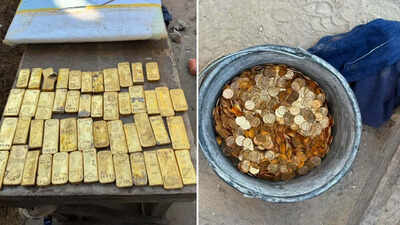
Local police shared images of the hoard, PC: Lokale Politie Dendermonde
An 18-year-old named Kobe was spending his summer break working construction in Sint-Gillis-Dendermonde, a small community in East Flanders, Belgium, when an ordinary day of demolition work turned into the find of a lifetime.
His crew had been renovating a former brewery building, once the home of a brewer in the early 20th century, and needed to remove part of the foundation in the cellar to lay a new sewer pipe. As they dug, Kobe noticed something unusual lying in the debris. What initially looked like ordinary €1 coins turned out to be part of a hoard containing gold coins, nuggets and bars that had been deliberately sealed inside a bricked-in section of the cellar wall, undisturbed for an unknown period until the construction work exposed it.
The discovery was eventually estimated at roughly €9 million, transforming a routine summer job into one of Belgium's most extraordinary recent treasure finds.
What construction workers found sealed inside the Belgian cellar wall
Kobe initially thought some of the metal pieces scattered in the rubble were loose euro coins. It was Kobe himself who then spotted a gold nugget lying among the debris, the moment that made clear the discovery was something far more valuable. According to a statement reported by VRT NWS, Belgium's public broadcaster, local police in Dendermonde confirmed that the discovery included numbered gold ingots and old gold pounds, deliberately hidden inside the wall rather than simply lost at the site.
Site manager Mario described his reaction after his crew began shouting that they had found gold, saying he went to inspect the discovery and watched as more coins and bars emerged from the wall. The hoard has been estimated at roughly 40 gold bars and 4,000 coins.
Why Belgian police moved quickly to secure the site and the gold
Once the crew realised the scale of what they had found, they contacted their employer, who instructed them to notify both the client and police. Officers from the local Dendermonde police force arrived and documented the discovery before the gold was transferred to a secure government facility.
Authorities are investigating the hoard, including its origin and who may have a legal claim to it. Police also urged members of the public to stay away from the site after news of the discovery spread, and people began arriving in search of additional treasure, warning that the building remained an active construction site with exposed pits and machinery.
The total value of the hoard has been estimated at approximately €9 million.
What happens next for the gold and the workers who found it
The ownership of the gold has not yet been settled. Belgian law distinguishes between an ordinary lost or found object, for which an original owner can potentially reclaim the item within a five-year period, and a treasure, legally defined as an object hidden or buried for which no one can establish ownership. Under Article 716 of the Belgian Civil Code, if a treasure is found on someone else's property, it belongs half to the person who discovers it and half to the owner of the property.
That means the eventual division of this particular hoard cannot yet be stated with certainty until authorities establish how the gold is legally classified and whether its original owner or their successors can still be identified.CAW Oost-Vlaanderen owns the building, and the organisation has said that if it ultimately receives proceeds from the discovery, it would use them to create additional shelter capacity for homeless people in the province. For Kobe, who was the person who first spotted the gold nugget, the immediate hope is that he will receive some form of finder's reward or share if the legal process ultimately recognises his claim.
Authorities are still investigating where the gold came from, when it was hidden and who, if anyone, legally owns it.