1 month ago
40
1 month ago
40

Across the US there are two voices rising out of the ordinary, one propagating the AI boom as the natural future of the world, and the other resisting it, calling it the doom that humans are bringing upon themselves.
In numerous states, people have carried out rallies and protests, even formulating laws that prohibit the development of data centres in their localities. From high water usage to noise and air pollution, multiple matters have been raised against them. But there is one person, a former farm bureau chief, who is inviting developers to buy his land in order to build an AI data centre, according to a report by the Wall Street Journal.
AI data centres boom
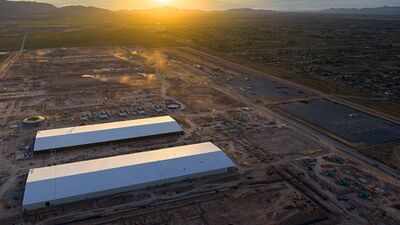
Blake Hurst, a farmer in Atchison County, Missouri, who led the Missouri Farm Bureau from 2010 to 2020, invited data centre developers to bid on his land in a WSJ op-ed, writing, "developers, make me an offer." His farm sits roughly 40 miles from the proposed White Cloud Acres project in neighbouring Nodaway County, a data centre campus that local reporting has valued at $6.3 billion and that county commissioners halted on July 21 with a moratorium of up to six months.
Hurst's pitch runs against national polling that puts opposition to nearby data centres at 63% to 70% and against a wave of restrictions that passed 500 jurisdictions nationwide this month. Nodaway County's commissioners passed their moratorium ordinance while they negotiate a development agreement with Scale Microgrids, the developer behind White Cloud Acres. A petition against the project gathered more than 7,000 signatures in roughly two months, according to the Northwest Missourian, and Maryville's mayor has said he opposes it.According to Hurst's counterargument, Nodaway County's population fell from 23,403 in the 2010 census to a 2025 estimate of roughly 20,300, a decline of about 13%. He cited project projections of 130 on-site jobs and more than $1 billion in tax revenue over the facility's 35-year life, and contended that a blocked project doesn't disappear; it gets built somewhere else while the tax base stays gone.As for water usage being the most cited argument against data centres, he said that the proposed Nodaway County centre would use municipal wastewater in a closed-loop cooling system, requiring an initial 1.5 million gallons.
But the centre's water requirements are on par with those of many small to medium-sized factories, he claimed. Against the rise of electricity rates, he hoped that the growth of data centres would lead to increased production of electricity, causing prices to level out or drop.
"The Nodaway developers promise to build their own generating capacity, so the data centre’s effect on the grid would be minor," he wrote.
No AI data centres
Emerson College polling found opposition to nearby data centres jumped from 42% in December 2025 to 63% in July, while a March Gallup survey put it at 70%, with 48% strongly opposed.
New York Governor Kathy Hochul signed the country's first statewide moratorium on July 14, pausing permits for projects of 50 megawatts or more, and Maine's legislature passed its own before Governor Janet Mills vetoed it.A Kentucky family turned down $26 million for roughly 900 acres in Mason County, about 10 times the local going rate of $6,000 per acre, while a neighbouring cattle farmer rejected offers of $35,000 per acre, more than four times market value. The Mason County developer redrew its site plan around willing sellers and kept moving, which supports Hurst's relocation argument. Holdouts have raised the price of farmland near transmission lines without stopping a single hyperscale campus outright, and Hurst, who ran the lobby representing farmers like them for a decade, is publicly volunteering to sell.