1 month ago
43
1 month ago
43

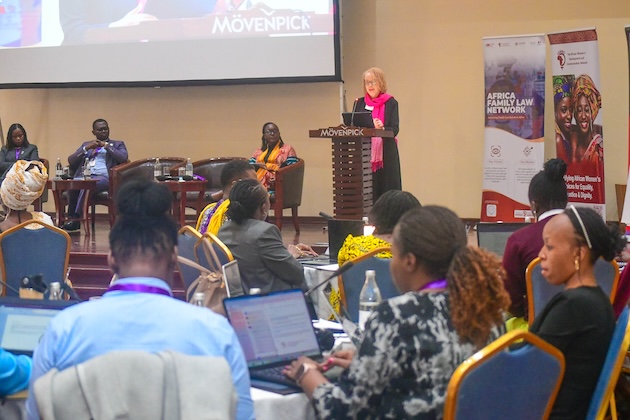 Lady Justice Mumbi Ngugi, a judge of Kenya's Court of Appeal, at the inaugural Africa Family Law Network Conference held in Nairobi. Credit: EqualityNow
NAIROBI, August 13 (IPS) - Women’s rights advocates, judges and lawyers have launched a coordinated campaign to reform family laws that discriminate against women and girls in Africa.
While the past decade has brought important legal advances in some countries, progress has also been marked by stagnation and backsliding. Increasingly, influential and often well-resourced and highly coordinated anti-rights actors are promoting regressive conservative ideologies that seek to repeal existing legal protections and obstruct reforms that would strengthen rights for women and girls.
Family law governs some of the most consequential aspects of daily life, including marriage, divorce, child custody, inheritance and property rights. Although national constitutions and regional human rights treaties guarantee many protections for women and girls, those guarantees are often undermined by discriminatory legislation, conflicting customary and statutory laws, and weak implementation.
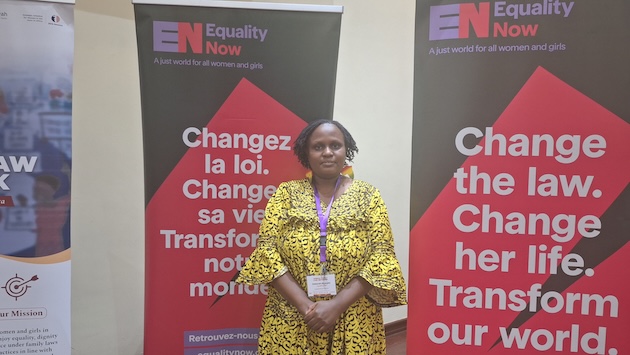 Deborah Nyokabi, associate manager for economic justice and family law at Equality Now, attends the Africa Family Law Network conference in Nairobi, Kenya. Credit: Chemtai Kirui/IPS
Rights advocates warn that family law has become a key target for coordinated anti-rights campaigns that promote restrictive interpretations of family, gender roles and “traditional values”, because shaping who has rights within the family sets the framework for whose rights are ultimately recognised and protected across society.
“They understand that if you control the family, you control society,” said Irene Mbengue, senior legal officer in the office of the African Commission’s special rapporteur on the rights of women in Africa, in remarks delivered on behalf of Commissioner Janet Ramatoulie Sallah-Njie at the inaugural Africa Family Law Network conference, held in Nairobi, Kenya, from August 4 to 6, 2026.
“If you define who counts as family, who has rights within the family, and who gets to make decisions in the family, you shift the entire social order.”
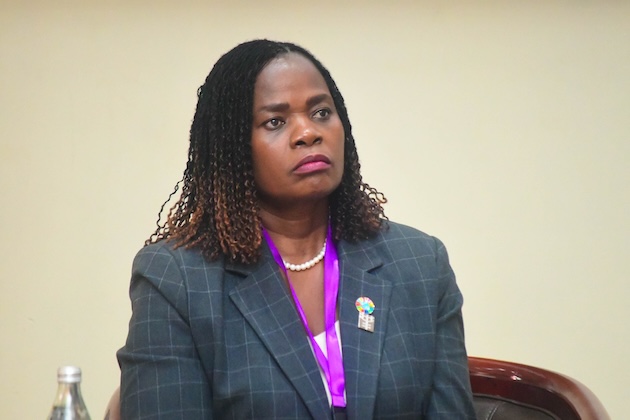 Anna Mutavati, UN Women regional director for East and Southern Africa, called for stronger regional coordination to counter growing anti-rights movements during the Africa Family Law Network conference. Credit: Chemtai Kirui/IPS
That struggle is playing out in Uganda, where rights advocates say proposed changes to marriage law could leave many divorced women with little claim to the assets built up over years spent raising children, running households and supporting their families.
Jackie Bless Pinyoloya, Strategic Initiative for Women in the Horn of Africa (SIHA) Uganda country coordinator, explained that the bill does not guarantee equal division of assets acquired during marriage and leaves women to prove the value of unpaid care work when claiming their share.
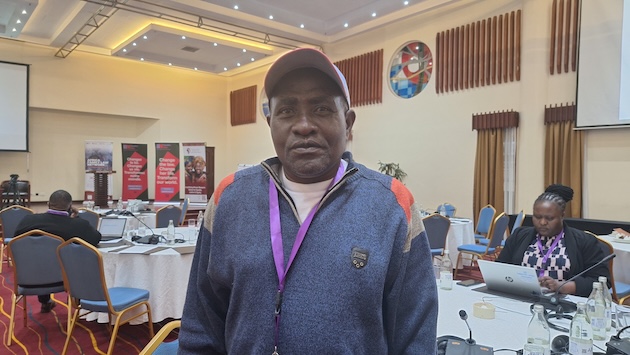 Chikwangu Katana, a village elder from Digirikani village in Kilifi County, Kenya, says legal reforms are more likely to succeed when communities understand why long-standing customary practices are changing. Credit: Chemtai Kirui/IPS
“At the point of divorce, a woman is told she only leaves with what she financially contributed… But who counts the years she spent caring for the family?” she said.
Pinyoloya said weak enforcement of existing protections also left women vulnerable, with domestic violence cases often being resolved informally by families or community leaders rather than through courts, while low penalties failed to deter perpetrators.
Equality Now’s 2024 regional study on African family laws in 20 African countries found that this tension over marital assets extends beyond Uganda. In countries including Kenya, Nigeria and Tanzania, judicial insistence on proving direct financial contribution routinely penalises homemakers, while courts struggle to place economic value on unpaid care work.
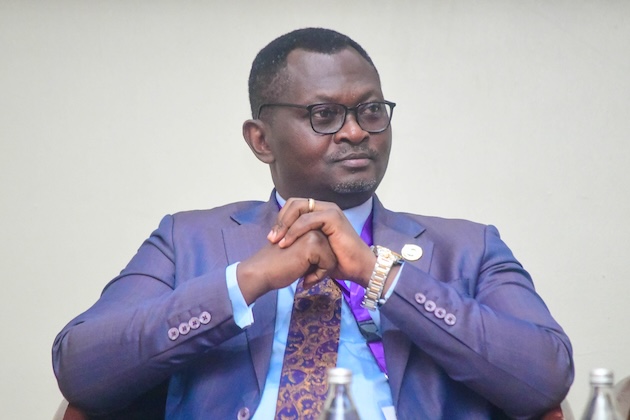 Dr Robert Eno, registrar of the African Court on Human and Peoples’ Rights, speaks during the Africa Family Law Network Conference. Credit: AFLN/IPS
The study also found that many countries retain unequal inheritance and property laws, permit child marriage through legal exceptions, do not criminalise marital rape, and continue to recognise customary and religious laws that discriminate against women and girls.
Rehema Namukose, senior regional programme officer for sub-Saharan Africa at Musawah, a global movement for equality and justice in Muslim family laws, highlighted how phrases such as “family values” often raised questions about whose interests and definitions they represented.
“When they throw around these words, you have to also ask yourself, what is the measure of what family is? How are they defining words like family? Values?” she said.
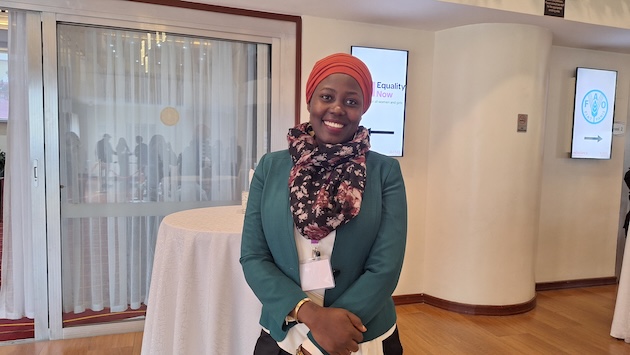 Rehema Namukose, senior regional programme officer for sub-Saharan Africa at Musawah, says competing definitions of “family values” are increasingly shaping debates over family law reform across Africa. Credit: Chemtai Kirui/IPS
For rights advocates, the argument is not only over individual laws but also over who gets to define the family those laws are meant to protect.
“Family values mean that the only type of family anti-rights actors believe should exist is a heteronormative, nuclear, patriarchal family consisting of a man, a woman and children,” remarked Deborah Nyokabi, Associate Manager for Economic Justice and Family Law at Equality Now.
Nyokabi added that those arguments were being used to justify restrictions on women’s reproductive autonomy, divorce, inheritance and property rights, while excluding sexual minorities from legal recognition.
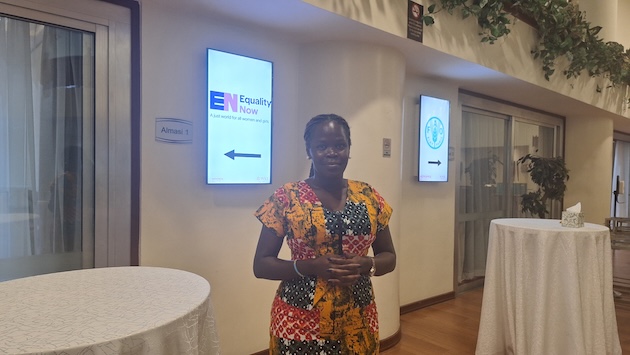 Jackie Bless Pinyoloya, Uganda country coordinator at the Strategic Initiative for Women in the Horn of Africa (SIHA), says proposed changes to Uganda’s marriage law could weaken women’s rights to marital property after divorce. Credit: Chemtai Kirui/IPS
Those speaking at the Africa Family Law Network’s conference made clear that defending existing legal gains will require stronger regional coordination, strategic litigation and sustained advocacy.
Anna Mutavati, Regional Director, UN Women, East and Southern Africa, spoke about taking the initiative to set the agenda, explaining, “We should not be playing catch-up, nor should we be playing defence.”
Mutavati urged advocates to coordinate across countries to counter increasingly organised anti-rights movements, and she highlighted the need to “…keep pushing for more rights and expansion of rights rather than just safeguarding what we have,” as defending past legal gains is no longer enough. The greater challenge now, she added, was ensuring that legal protections reached the women they were intended to protect.
Dr Robert Eno, registrar of the African Court on Human and Peoples’ Rights, described how many of Africa’s strongest legal protections for women and children had yet to translate into everyday life, with constitutional guarantees and regional treaties often failing to change what happens inside families.
“Important reforms exist in constitutional provisions, statutes and regional commitments,” Eno said. “Yet, in many communities, the distance between law and lived reality remains significant.”
He pointed to the African Court’s landmark judgment against Mali, which rejected the government’s argument that customary or religious law could override its obligations under the Maputo Protocol. The ruling affirmed that marriage requires the free consent of both spouses and that equality within the family cannot be separated from equality before the law.
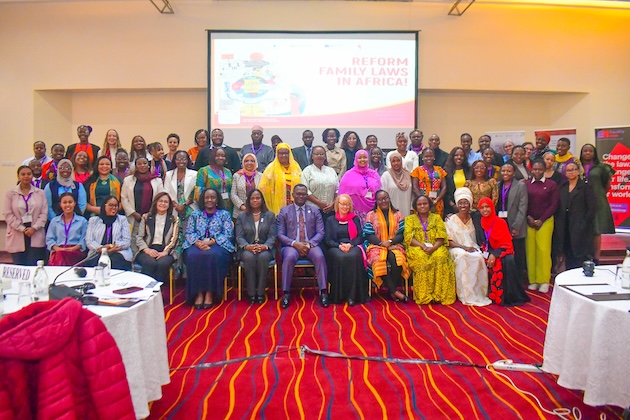 Members of the Africa Family Law Network gather during the inaugural conference in Nairobi, Kenya, on August 4, 2026. Credit: Chemtai Kirui/IPS
But court judgments alone could not dismantle entrenched discrimination, Lady Justice Mumbi Ngugi, a judge of Kenya’s Court of Appeal, told IPS News.
“The law has advanced considerably. Jurisprudence is pro-women’s rights and pro-children’s rights. Implementation is a problem,” she stated.
Many women, particularly in rural communities, either did not know those rights existed or could not afford to enforce them, she said, adding that constitutional guarantees meant little if women could not access the courts or exercise the rights they already had.
Chikwangu Katana, a village elder from Digirikani sub-location in Kenya’s Kilifi County, said many families continued to resolve family disputes through customary systems.
“People have to understand why things are changing. If they don’t understand, they won’t accept it,” he said.
Nyokabi advised that translating legal protections into everyday life would require governments and civil society to work with religious and traditional leaders while strengthening regional networks, such as the Africa Family Law Network, which enables campaigners to share legal strategies and advocate for more equal family laws that are compatible with African societies.
One such effort is already under way through the East African Law Society’s Family Law Committee. Lawyers from eight countries are documenting common legal challenges, from cross-border child custody disputes and adoption to assisted reproductive technologies, mediation and arbitration, with the aim of developing recommendations for law reform agencies across the region.
Patricia Mundia, who chairs the committee, said the process would also help practitioners develop shared approaches to family law issues that increasingly extend beyond national borders.
Sustaining those efforts, however, will require resources as women’s rights organisations compete for shrinking pools of donor funding.
Rose Buabeng, senior programme officer for resourcing at the African Women’s Development Fund, said funding for women’s rights and feminist activism was becoming increasingly constrained amid a growing backlash, adding that AWDF had adapted its funding processes to respond more quickly to the needs of women’s rights organisations.
IPS UN Bureau Report
© Inter Press Service (20260813083142) — All Rights Reserved. Original source: Inter Press Service