1 hour ago
7
1 hour ago
7

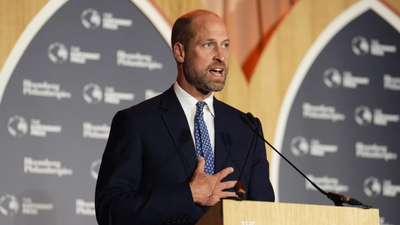
A conservation project connecting wild habitats from Wyoming to Canada’s Yukon has been named a finalist for Prince William’s Earthshot Prize. The Yellowstone to Yukon Conservation Initiative has spent 33 years protecting 59 million acres of land and supporting 204 wildlife crossings across North America.
The non-profit project is one of 15 global finalists for the 2026 environmental award, according to The Associated Press. The project brings together scientists, private landowners, local governments, and Indigenous communities across the Rocky Mountains. By building wildlife overpasses, underpasses, and safety fences along major highways, the initiative helps large animals move safely through their natural habitats without being hit by vehicles.
Tracking wildlife across borders
The idea for the cross-border wildlife corridor began in the early 1990s after researchers tracked a radio-collared wolf named Pluie. Satellite data showed that the wolf travelled across three US states and two Canadian provinces. Her movements showed scientists that individual parks and nature reserves were not large enough to support animals such as wolves, grizzly bears, and caribou over the long term. These findings led to the official creation of the Yellowstone to Yukon initiative in 1993.
Its goal was to connect broken-up habitats across a 2,100-mile mountain range.
Highway crossings reduce animal deaths
Busy highways are one of the biggest dangers for wildlife moving through the Rocky Mountains. To reduce deadly crashes, the organization has worked with transport authorities to build special wildlife crossings. In places such as Banff National Park in Alberta, overpasses and underpasses covered with native plants have reduced collisions between vehicles and hoofed animals by 96 per cent.
The organization has also worked to reconnect isolated grizzly bear populations.
According to project records, the distance between separated bear groups in the United States has been reduced from 240 kilometres to 75 kilometres.
Indigenous leadership strengthens conservation
Indigenous communities manage or share management of about one-quarter of the protected land within the corridor. These partnerships have helped several threatened species recover from very low numbers.
In northern British Columbia, an Indigenous-led project to protect the Klinse-Za caribou herd helped its population increase from 38 animals in 2013 to 187. Dr Jodi Hilty, President and Chief Scientist of the initiative, said successful conservation requires long-term cooperation between communities.
"Being selected as an Earthshot Prize Finalist gives this extraordinary region a chance to be recognised around the world," Hilty said in a press release.
"Yellowstone to Yukon is not only a story about wilderness; it is a story about the people who live here and the choices they are making to protect a shared home."
Global recognition for conservation
Founded by Prince William in 2020, the Earthshot Prize gives five annual £1 million awards to projects working to repair environmental damage. The Yellowstone to Yukon initiative is a finalist in the Protect and Restore Nature category. Prince William praised the 2026 finalists before the official awards ceremony, which is scheduled to take place in Mumbai in November.
"Every year, our finalists give me renewed optimism," Prince William said in an official statement.
"They show us that, even as the environmental challenges remain urgent, extraordinary people around the world are already proving that progress is possible. Seeing solutions work gives us all confidence to act." The initiative plans to protect another 50 million acres and help create at least 50 more wildlife crossings by 2030.