58 minutes ago
2
58 minutes ago
2

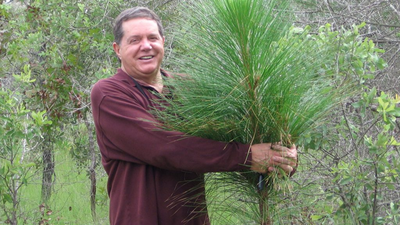
He is 85, known as the father of sociobiology, has been at Harvard for 60 years, and has won a hundred scientific awards, including two Pulitzer Prizes. Yet what E.O. Wilson, an evolutionary biologist, is focused on is a new conservation approach, a new ecological Grail which is a quest to refute conservation sceptics who think there isn't enough left of the natural world to be worth saving, according to a report by Smithsonian Magazine.Through the 544 million years or so, since hard-shelled animals first appeared, there has been a gradual increase in the number of plants and animals on the planet, despite five mass extinction events. While the high point of biodiversity most likely coincided with the moment modern humans left Africa and spread across the globe, over the years, species faltered and vanished. It was slow at first, but now, the event is taking place at an acceleration where Wilson predicts the oncoming of a "biological holocaust," a sixth mass extinction event, caused by humans.
According to him, the only way humans could prevent a mass extinction crisis would be to set aside half the planet as permanently protected for the ten million other species.While one would believe this to be a fantastical dream inspired by a dreamer, a forest being created by M.C. Davis, a multimillionaire, is already on the pathway. Davis's idea has been to revive the 'Piney Woods', the signature ecosystem of the American Southeast.
The longleaf pine forest once covered 90 million acres, or about 60 per cent of the land, in a virtually continuous 1,200-mile stretch across nine states from Virginia to East Texas.That forest has been reduced by 97% and there are about three million acres of it left. The coral reefs have been destroyed by about 10-20% and the Amazon rainforest has been damaged by more than 20%. The longleaf pine forest’s “Big Cut,” as it’s still known, began after the Civil War and left behind what commentators referred to as “a sea of stumps.”
Much of the land has since been reforested, but de-longleafed, and is now planted with row after row of faster-growing pines raised for pulpwood.Davis, who is a commodities trader in timber and oil and gas rights, and grew up about 65 miles west of his forest, has spent the past decade spending half a million dollars annually planting longleaf pine trees and another half million on other parts of a longleaf forest.His awakening for the cause came from a 'Black Bear Seminar' that he walked in on while being stuck in traffic.
“There was an old drunk, and a politician who’d thought there’d be a crowd, and a couple of Canadians looking for day-old doughnuts and coffee—and, up on the stage, two women talking about saving black bears. They were riveting. The next day I gave those ladies enough money to keep going for another two years, which I think scared them, it was so out of the blue.
Then I asked them for a 100-book environmental reading list for me, for my education.
I spent a year reading Thoreau, John Muir, and Ed Wilson. Then I started buying up land to see what I could do,” he told the outlet.
Saving the forests and the dwellers
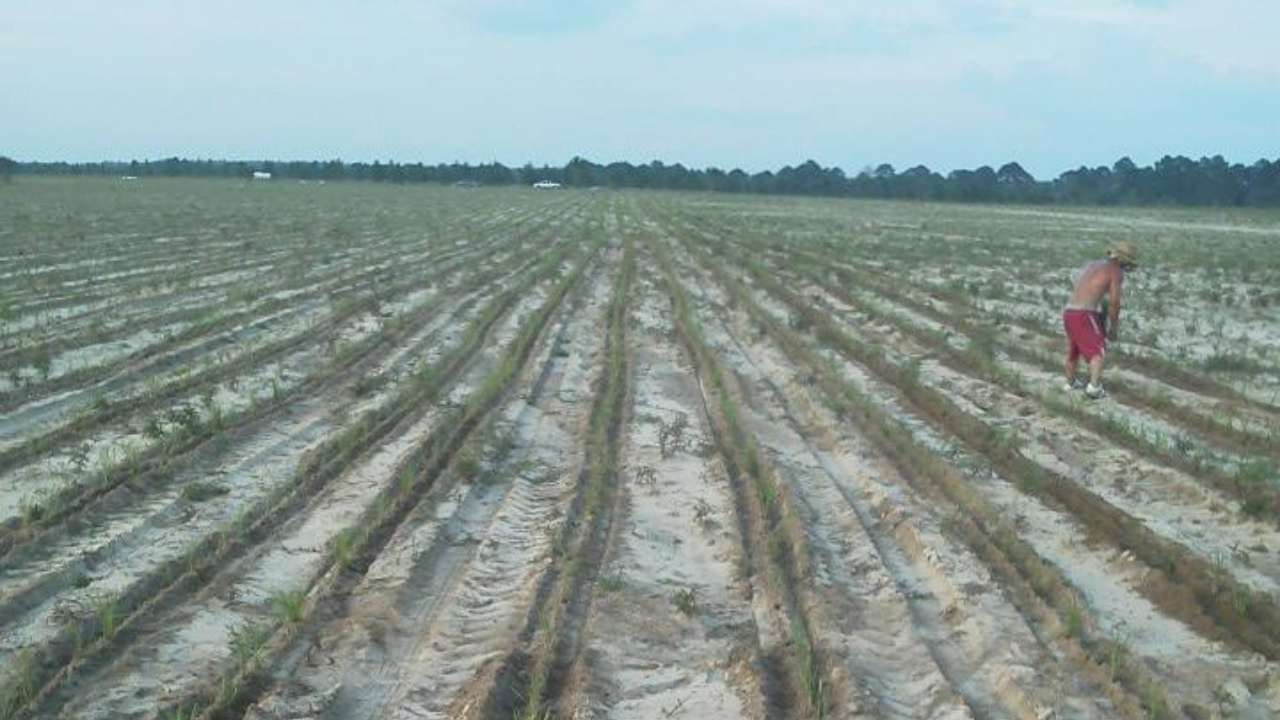
Nokuse is the biggest private preserve and the biggest restoration project east of the Mississippi.
If one was going to save Florida black bears, it was clear from the start, they’d have to save longleaf forests, their preferred habitat. An adult male black bear roams across perhaps a hundred square miles of land. North Florida already had some good-sized clusters of publicly owned longleaf—national forests, state forests, wildlife management areas and, in the western Panhandle, Eglin Air Force Base, a huge facility that back before World War II had itself been a national forest.
The problem was that 70 miles separated the first two protected longleaf forests—and it was another 95 miles to the third.As he dug deeper, Davis realised that the coastal Southeast is a “hyperdiverse” biological hotspot with up to 60 different species in a single square yard. Davis planned to buy up and re-longleaf the “in-between” open space east of Eglin and west of a protected river corridor. He had his sights on a series of abandoned peanut farms and unproductive pulpwood forests with low asking prices.He bought 51,000 acres of degraded farms and forests, that barely included 1,500 acres of longleaf pines in scattered patches. He named the area Nokuse Plantation, pronounced 'No-GO-see' and meaning 'bear' in the language of the Muskogee people who once lived there. Nokuse is the biggest private preserve and the biggest restoration project east of the Mississippi.To honour Wilson, whom Davis credits as the inspiration for his effort, he built a $12 million E.O.
Wilson Biophilia Center at one edge of Nokuse, where thousands of fourth through seventh graders from six counties get free classes that let them hold real baby gopher tortoises and clamber and pose for pictures on a giant ant sculpture.At Nokuse, Davis and his crew of workers have thinned 22,000 acres of pulpwood pines and planted eight million longleaf seedlings. He’s brought flames back to the woods after a half-century absence, setting carefully controlled fires on about 10,000 acres every year.
Bears have reintroduced themselves in the area, ambling in from Eglin Air Force Base nearby. Davis is planning to bring back red-cockaded woodpeckers and bison.So far, Nokuse's proudest achievement has been the recruitment of the foot-long gopher tortoise. Nokuse Plantation director Matt Aresco, a biologist with a PhD in turtle studies, has retrieved 3,500 otherwise doomed gopher tortoises from all over Florida. These “ecosystem engineers,” as one conservation biologist calls them, have the kind of transforming influence on their surroundings that beaver families do.As of now, Nokuse still looks scruffy. “I tell people we’re in Year 13 of a 300-year program. I could easily make 1,000 acres look beautiful, but the extinction clock’s ticking, so I decided to take on the bigger challenge,” said Davis.