35 minutes ago
1
35 minutes ago
1

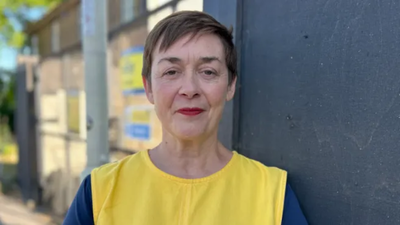
"We're still just stuck waiting for other people to make decisions about our future," leaseholder Sarah Williams says [BBC]
Former residents of a London apartment block destroyed in a major fire are still paying monthly mortgages on homes that were reduced to rubble two years ago. The fire at the seven-storey Spectrum Building on Freshwater Road in Dagenham started in the early hours of 26 August 2024.
More than 80 people were forced to leave their homes and four were injured. Scaffolding around the former office block, which had been put up to remove unsafe cladding using a £5.9 million government grant, helped the flames spread quickly. The building suffered such serious structural damage that it was later demolished, leaving homeowners without a physical property.A report by ITV News London on 26 August 2026 found that affected leaseholders are still stuck in financial uncertainty.
Banks continue to collect mortgage payments even though the building no longer exists, while insurance claims remain tied up in complicated legal and financial processes. "We still haven't got our money, and we have no idea whether it will even cover the value of the flats," said Sarah Williams, a charity worker who bought her apartment in 2016, in an interview with ITV News London.
"We've still got to pay our mortgages.
We've still got to pay our rent."
Insolvency delays insurance payments
The financial situation became more complicated after the building's freeholder, Arinium Ltd, went into administration following the fire. Financial consultancy firm FRP was appointed to manage the company's assets and deal with insurance claims. According to updates from PropertyWire, insurance policies cover temporary emergency accommodation for displaced leaseholders for up to three years.
Residents are worried about what will happen when that period ends if their final compensation has not yet been paid.
FRP administrators have asked the court for permission to begin distributing the first round of insurance payments to leaseholders and creditors. The firm has described the case as "incredibly complex", saying it needs special valuation methods and independent legal advice to work out how much each person should receive.
In a statement, FRP said that dealing with insurance payments was one of its main responsibilities. However, the administrators have no control over private mortgage agreements between residents and banks. Former residents have also faced further demands for money. An investigation by housing publication Inside Housing found that managing agents had sent bills for unpaid service charges dating back to 2021.
Some two-bedroom properties were being charged as much as £2,130, despite the homes no longer existing.
Government faces pressure over building safety
The continuing problems faced by Spectrum Building residents have increased scrutiny of Britain's building safety policies. After the 2024 fire, then-Deputy Prime Minister Angela Rayner visited the Dagenham site. She criticised the slow removal of dangerous cladding across the UK and promised government action to speed up safety work.
The Ministry of Housing, Communities and Local Government (MHCLG) also said urgent action was needed.
"Former residents of Spectrum building must be fairly and urgently compensated for their losses, and it is for the administrator to make sure that they get any money they are rightfully owed," an MHCLG spokesperson said. "Our interest is getting back taxpayers' money that was not used for its intended purpose – and this does not supersede the interests of the residents."
Campaigners say the wider building safety crisis has still not been properly addressed. Data from End Our Cladding Scandal showed that the share of unsafe buildings where cladding work had either started or been completed increased only from 50 per cent to 53 per cent during the two years after the Dagenham fire. "It feels like Labour prioritised building 1.5m homes, and that's meant they've swept ending the building safety crisis under the carpet," said Giles Grover of End Our Cladding Scandal, according to PropertyWire.
Dispute over government funding
Former residents also faced more uncertainty after the Greater London Authority registered an interest as a possible creditor in the administration of Arinium Ltd. The authority is seeking to recover any unused part of the £5.9 million government grant that had been given for cladding removal through the Building Safety Fund. The Ministry of Housing later issued a clarification on its official media blog, saying the claim was a normal step under UK insolvency law.
The department said taxpayers' money would only be recovered if money remained after leaseholders had received full market compensation for their lost homes and belongings. For residents such as Jesse Gill, however, the explanation has done little to ease the financial pressure. Gill moved into the Spectrum Building with his wife only two weeks before the fire destroyed their flat. "We haven't been reimbursed our ground rent or service charges, and we're having to pay our mortgage for a property that doesn't exist," Gill told reporters. Although the London Fire Brigade has completed its technical investigation into the structural failures at Freshwater Road, former residents remain caught between banks, insurers and administrators. Two years after the fire, they continue to make monthly mortgage payments on homes that are no longer there.