1 hour ago
1
1 hour ago
1

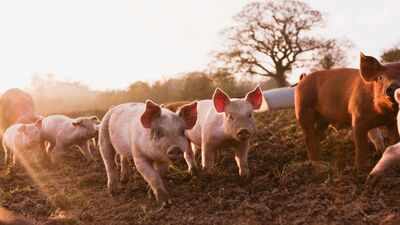
On a remote, windswept archipelago far south of New Zealand, a small herd of pigs lived out more than two centuries as one of the world’s most isolated feral populations. Their ancestors were left on the Auckland Islands in 1807, released by sailors as a living food store for any shipwrecked castaways who might one day wash up on those storm-battered shores.
For 192 years, the pigs roamed the subantarctic forests and bogs, adapting to a harsh climate and becoming a unique genetic lineage known as the Auckland Island pig. In the early 2000s, as part of a major conservation effort to restore the islands, the decision was made to eradicate all feral pigs. Before that work began, 17 individuals were captured and brought back to the mainland to preserve the breed. As documented by the Rare Breeds Trust of New Zealand, their rescue marked the end of one chapter and the uncertain beginning of another for these living relics of maritime history.A gift for shipwrecked sailorsThe story begins in the age of sailing ships, when the Southern Ocean was a dangerous highway for vessels rounding the bottom of the world. The Auckland Islands, a rugged group of volcanic islands about 450 kilometres south of New Zealand’s South Island, were notorious for their ferocious weather, steep cliffs and dense, tangled vegetation. Many ships were lost in these waters, and those who survived the wrecks faced a grim struggle to stay alive on the barren shores.
In 1807, a group of sealers or sailors, accounts vary, released a small number of domestic pigs on the largest of the Auckland Islands. The idea was simple and practical. If future castaways found themselves stranded, they would at least have a source of meat that could breed and sustain itself without human care. The pigs were hardy, able to forage in forest and scrub, and they quickly adapted to the cool, wet conditions of the subantarctic.
Over the decades, more pigs may have been added by other visitors, but the core population descended from those original animals. With no natural predators and plenty of plant food, along with the occasional seabird or invertebrate, the herd grew and spread across the main island and some smaller ones nearby.Life on a subantarctic islandThe Auckland Islands are a world apart from the farms and pastures where domestic pigs usually live.
The climate is cool and wet year-round, with frequent gales and dense cloud. The landscape is a mosaic of stunted forests, fern lands, peat bogs and rocky coastlines. Food is available, but it is scattered and seasonal, and the pigs had to range widely to find enough to eat.Over 192 years, the pigs evolved into a distinct type. They were generally smaller than modern farm breeds, with thick coats of dark hair, strong legs and tough hooves suited to boggy ground.
They were extremely hardy, able to survive on a diet of roots, shoots, fungi, carrion and whatever else they could dig up in the forest floor. Their behaviour was wary and elusive, shaped by centuries of avoiding human contact in an environment where people were rare but sometimes dangerous.
To conservationists and historians, these animals became more than just feral livestock. They were living links to the early days of European exploration and sealing in the Southern Ocean, a rare example of an old domestic breed surviving in near-wild conditions with little to no crossbreeding from modern pigs.A conflict between heritage and conservationBy the late 20th century, the value of the Auckland Islands had shifted in the eyes of scientists and policymakers. Once seen mainly as a remote outpost on a shipping route, the archipelago was now recognised as a globally important nature reserve. It is home to unique plants, seabirds and marine mammals, many of which are found nowhere else. Several species of albatross, penguin and petrel nest on the islands, and the surrounding waters are rich in marine life.From this new perspective, the feral pigs were a problem. They disturbed nesting birds, competed for food with other wildlife and added to erosion on fragile soils. New Zealand has a strong conservation ethic and a policy of removing introduced mammals from its offshore islands in an effort to protect native ecosystems. The pigs, despite their historic interest, were classified as an invasive species that needed to be eradicated.
This created an uncomfortable tension. On one side was the ecological argument for removing the pigs to allow the native flora and fauna to recover. On the other stood the historical and genetic value of a unique pig lineage that had survived in isolation for nearly two centuries. For many, it was painful to think of wiping out an entire population that was itself a kind of living heritage.The decision to rescue a fewIn the end, a compromise was reached. Conservation authorities decided that the feral pig population on the Auckland Islands would be removed to protect the islands’ natural values, but that a small number of animals would be captured beforehand and brought to the mainland to preserve the breed.
This approach is common in New Zealand conservation work, where rare or historically significant introduced species are sometimes rescued before eradication campaigns begin.
In the early 2000s, teams visited the islands to trap and capture pigs. The work was challenging. The animals were wary, the terrain was difficult, and the weather was often harsh. Even so, they managed to secure 17 individuals, a mix of males and females representing different family lines within the population.
These 17 became the founding stock of the mainland conservation programme for Auckland Island pigs. Once the rescue was complete, the remaining pigs on the islands were systematically removed. By the time the eradication was declared successful, no feral pigs were left on the Auckland Islands. The landscape began to change almost immediately, with native plants regenerating in areas that had been heavily rooted and new opportunities for nesting birds to reclaim former pig habitat.A new life on the mainlandBack on the New Zealand mainland, the 17 rescued pigs faced a very different world. They were placed in secure farm settings where they could be monitored, bred and cared for without the risk of escaping and becoming a pest. The goal was not to turn them into a commercial breed, but to maintain them as a genetic reservoir and a living historical resource.The Auckland Island pig is now classified as a rare breed. It is valued for its hardiness, disease resistance and ability to thrive on rough forage, traits that are of interest to smallholders and conservation-minded farmers.
Some owners keep them in semi-natural conditions to preserve their wilder behaviour and physical characteristics. Others use them in crossbreeding programmes to introduce resilience into other lines, though purebred breeding is encouraged to maintain the integrity of the original stock.
For the Rare Breeds Trust and similar groups, the pigs are more than livestock. They are a tangible connection to the maritime past, to the era when ships sailed the Southern Ocean with minimal support and when castaway depots and live food stores were part of survival planning.
Each animal carries in its genes the story of 192 years of isolation on a remote island.What the story reveals about humans and natureThe odyssey of the Auckland Island pigs, from abandoned food source to protected rare breed, reflects larger shifts in attitudes to islands, wildlife and conservation. In the 19th Century, bringing pigs to a deserted island for future shipwreck survivors was a perfectly reasonable thing to do.
Human safety and utility were the priorities and little consideration was given to long-term ecological consequences.
By the 21st century, the focus had changed. The intrinsic value of native ecosystems and the rights of indigenous species to exist free from the interference of introduced mammals took precedence. Once a useful resource, the pigs were reclassified as a threat to biodiversity. But their historical and genetic significance was not forgotten.
The decision to save a few before they are wiped out suggests a more complex view, one that seeks to balance ecological restoration with a reverence for living history. Today, the Auckland Island pigs that remain on the mainland are a reminder of how human actions ripple through time. A decision made in 1807 to release a few pigs on a distant island shaped an entire population for nearly two centuries. A later decision to remove them reshaped the islands’ ecology and gave the breed a second chance in a very different setting.A future that remains uncertainThe long term future of the Auckland Island pig as a distinct breed is not guaranteed. Numbers are still relatively small, and maintaining genetic diversity requires careful breeding management. Interest from farmers and hobbyists can wax and wane, and without a clear economic role, the pigs depend largely on the dedication of a small community of supporters.Even so, their survival on the mainland ensures that the story of the Auckland Islands’ feral pigs does not end with their eradication from the archipelago. They continue to roam pastures far from the subantarctic winds, carrying in their DNA the memory of a harsh and remote island where their ancestors once lived as the only large land mammals for nearly 200 years.