1 hour ago
2
1 hour ago
2

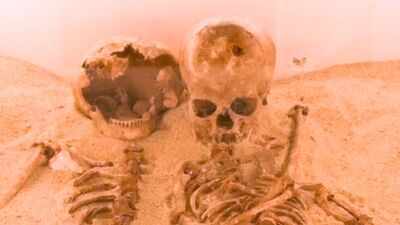
PC: Sapienza University of Rome
In 1963, archaeologists exploring Romito Cave in Calabria, southern Italy, uncovered an unusual Upper Palaeolithic burial in which two people lay together in an embrace more than 12,000 years ago.
For decades, the remains were believed to belong to an adult male and an adolescent male, with their differences in body size adding to questions about their identity and relationship. As per Sapienza University of Rome, researchers found that both individuals were female and were first-degree relatives, most likely a mother and daughter. The genetic evidence also helped solve a long-standing medical mystery surrounding the younger individual, revealing a rare inherited disorder linked to the NPR2 gene.
The discovery not only changes the identity of the two prehistoric individuals but also provides clues about genetic disease in ancient populations.
What did researchers discover about the two skeletons buried in Romito Cave
The two skeletons were discovered together in Romito Cave, a Palaeolithic site in Calabria, in 1963. The unusual burial drew attention because the individuals had been laid to rest in an embrace. One skeleton, known as Romito 1, belonged to an adult who stood about 145 centimetres tall, while Romito 2 was an adolescent measuring around 110 centimetres.
Earlier assessments identified both individuals as male, but their sex and relationship remained uncertain.
The striking difference in their stature, particularly the smaller size of Romito 2, also raised the possibility of a rare skeletal disorder. Researchers have now revisited the remains using ancient DNA recovered from the inner ear, an area known to preserve genetic material particularly well over thousands of years.
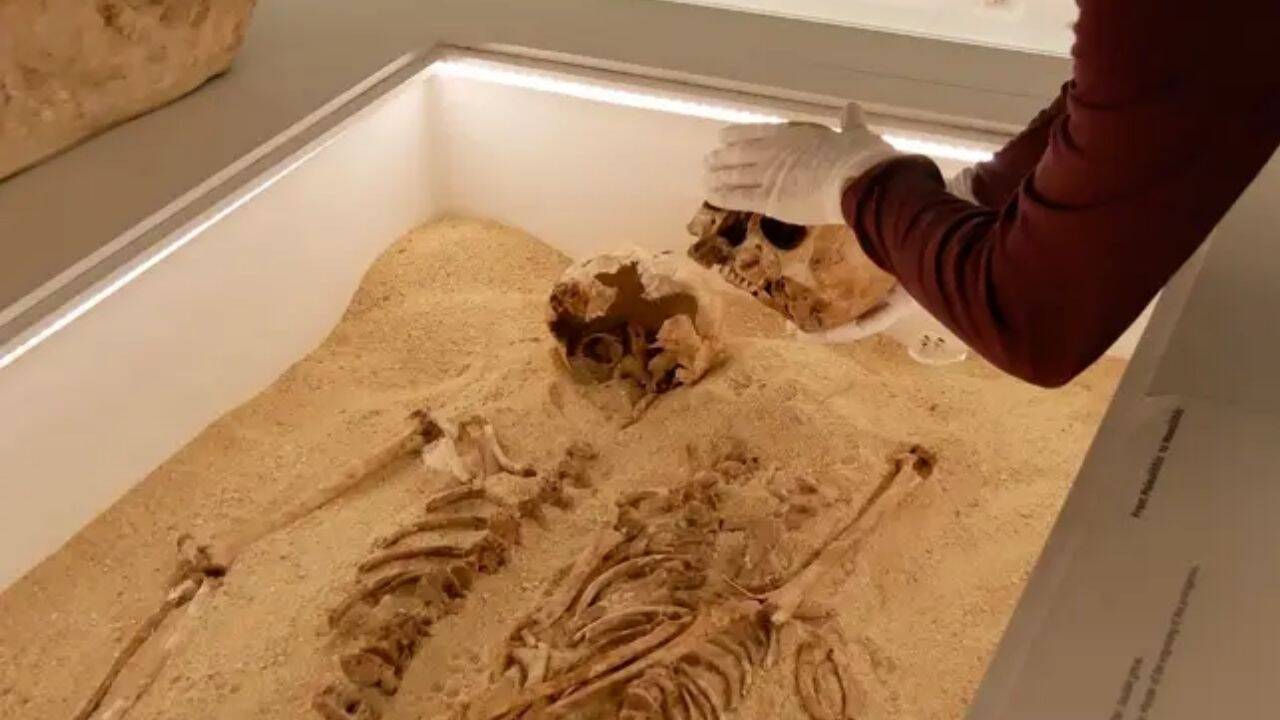
PC: University of Vienna
What does DNA reveal about the two Romito Cave skeletons
Genetic testing changed the interpretation of the burial. DNA analysis established that Romito 1 and Romito 2 were both female and that they were first-degree relatives, most likely a mother and daughter. This finding means the embrace was not the burial of an adult man and adolescent boy, as previously believed. Researchers examined their genetic connection while investigating the unusual physical features seen in their skeletons.
Romito 2 carried two copies of a variant in the NPR2 gene, while the older woman carried one altered copy. The new results clarify that the two individuals were biologically related, rather than simply members of the same burial group.
What rare genetic disease was identified in the 12,000-year-old adolescent
The genetic results provided the first DNA-confirmed diagnosis of a rare disease in a person who lived more than 12,000 years ago. Romito 2 had two copies of an NPR2 variant, confirming Maroteaux-type acromesomelic dysplasia, a hereditary condition associated with severe growth reduction and limb shortening.
Her remains had previously suggested acromesomelic dysplasia, but bones alone could not confirm it.
Romito 1, believed to be her mother, had one altered copy of the gene and was shorter than average, consistent with carrier status. The finding shows that rare genetic disorders existed in human populations before modern medicine and can be identified through palaeogenomics. Ancient DNA gives researchers a way to investigate inherited conditions and trace genetic disorders in human lives before written records.
What does Romito 2 reveal about care and support in prehistoric society
The discovery also offers a glimpse into how prehistoric communities may have supported people with significant physical limitations. Romito 2 survived into late adolescence despite severe growth reduction and shortened limbs, which could have made movement difficult in a mobile hunter-gatherer society. Researchers suggest that her survival may point to sustained social care from members of her community.
She may have relied on others for food and assistance while travelling. However, the evidence cannot show exactly how this support was provided, so researchers present it as an interpretation rather than a certainty.