2 months ago
36
2 months ago
36

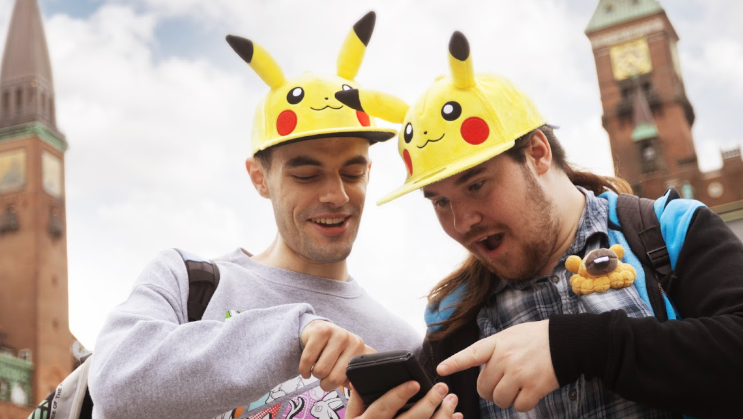 Image source, AP Images for Scopely Explore
ByLaura Cress
Technology reporter
Pokémon fans have spent the past three decades trying to catch 'em all - and since the beginning this hunt has often taken place outside the home.
The popular series started out on Nintendo's portable Game Boy console in 1996, and has found modern success on people's phones.
The mobile app Pokémon Go, which is now celebrating its 10th anniversary, uses GPS and augmented reality to let players find and catch virtual monsters in real-world locations.
It has been downloaded more than a billion times across iOS and Android devices, with millions still logging on each day.
And Michael Steranka, vice president of product at the game's publisher Scopely, says the Pokémon Go experience has always been about bringing people together.
"Pokémon Go will always start with community - we think we're only scratching the surface here," he said.
"We often receive wedding invites from players who met through Pokémon Go... because it's been such an integral part of their relationship."
It may seem a surprising sentiment to have for a game and its studio.
But Pokémon Go's connection with its players appears to have prevailed, as hundreds of gamers gathered in New York's Times Square on Thursday to battle a giant Mewtwo - a reference to the game's original trailer published over a decade ago, external.
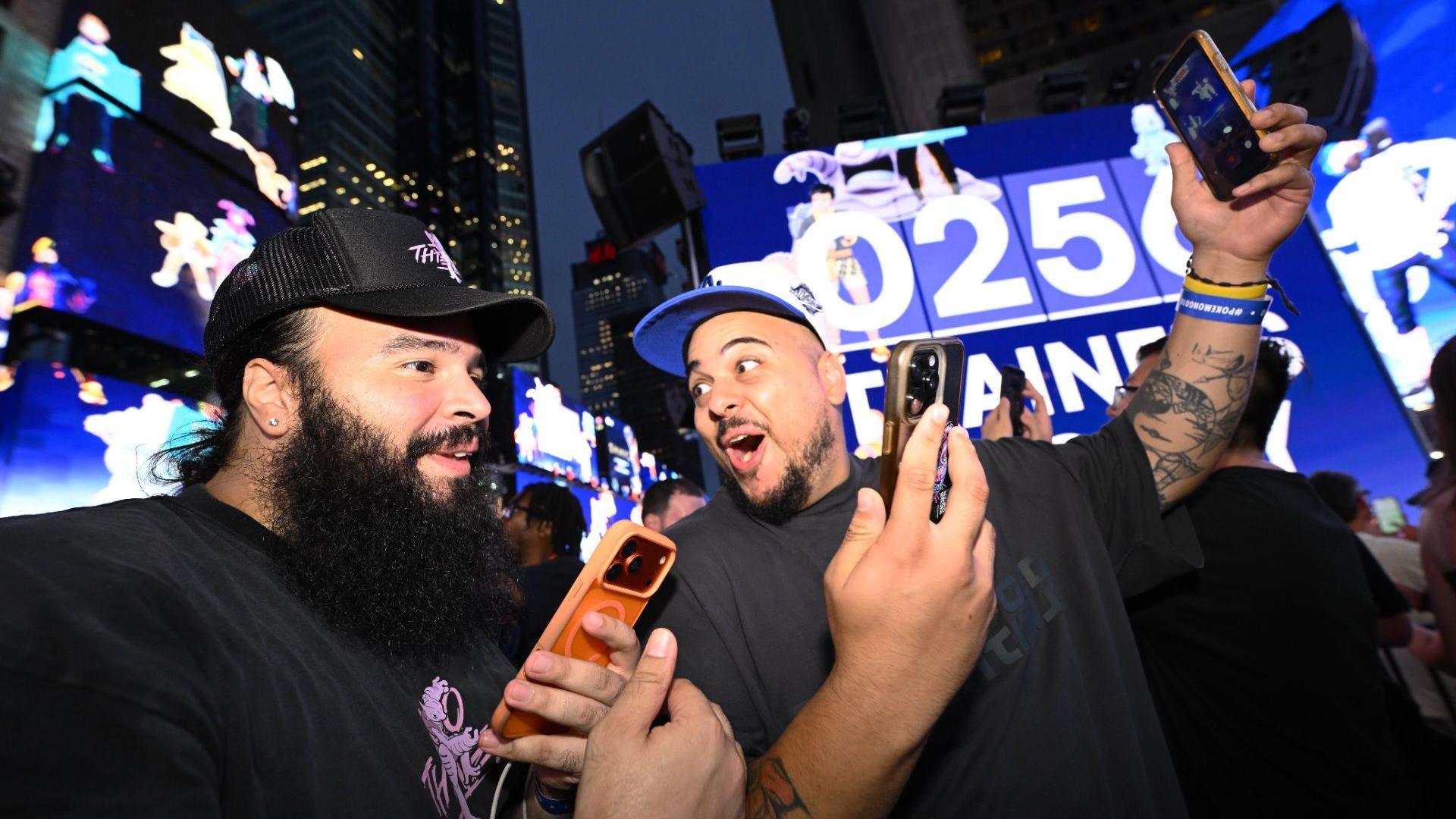 Image source, AP Images for Scopely
Pokémon Go players celebrated the game's 10th anniversary at the real-world event in Times Square on Thursday
When it was released in 2016, Pokémon Go quickly became one of the biggest mobile game launches in history.
The technology overlays digital creatures onto a live view of the real world through a smartphone's camera, making it appear as though they're standing in front of the player.
It sparked a craze where people flocked to places like parks, waterfronts and shopping malls in the hope of catching Pokémon.
"By allowing you to take your mobile phone out into the world to discover virtual creatures, Pokémon Go helped realise the millennial dream of becoming a Pokémon Trainer," said Matthew Reynolds, editor of Pokémon news website One More Catch, external.
The game's popularity has endured. It has hosted major live events in more than 60 countries, averaging more than 400,000 attendees a year since the first Go Fest in 2017.
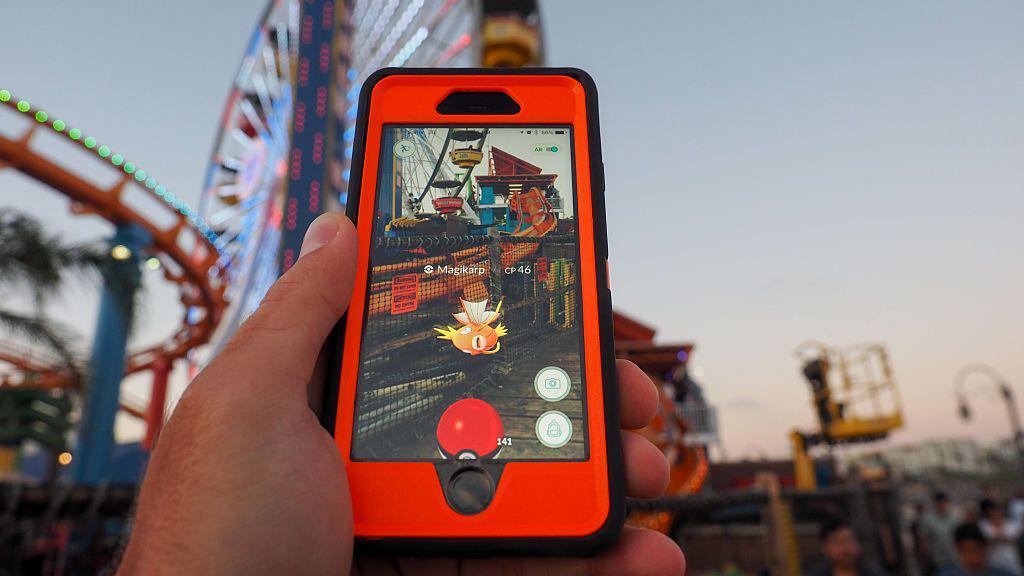 Image source, PG/Bauer-Griffin
Scopely estimates players have explored over 100 billion kilometres while playing Pokémon Go - roughly 334 round trips between the Earth and the Sun.
UK content creator j0beats runs one of Twitch's biggest channels dedicated to the game and regularly travels to events like the one in New York to meet fellow players.
"People always think it's crazy that you travel all over just to catch some pixels," she laughs.
"But it's not just about that. When you go to these big events, you're there for the people and for the energy of it.
"It's like a music festival - you could just stay at home and just listen to the music, or you could go out there and you could listen live and appreciate it with other people. It's the same sort of concept."
But the streamer says her fondest memory of the game is a little closer to home.
In 2025, Pokémon Go's Wild Area - one of its events - came to South Yorkshire.
"It was the only European event and it was hosted in Doncaster, which is sort of just around the corner from me," she said.
"So it was really exciting to collaborate with the community ambassadors there and help them host the event."
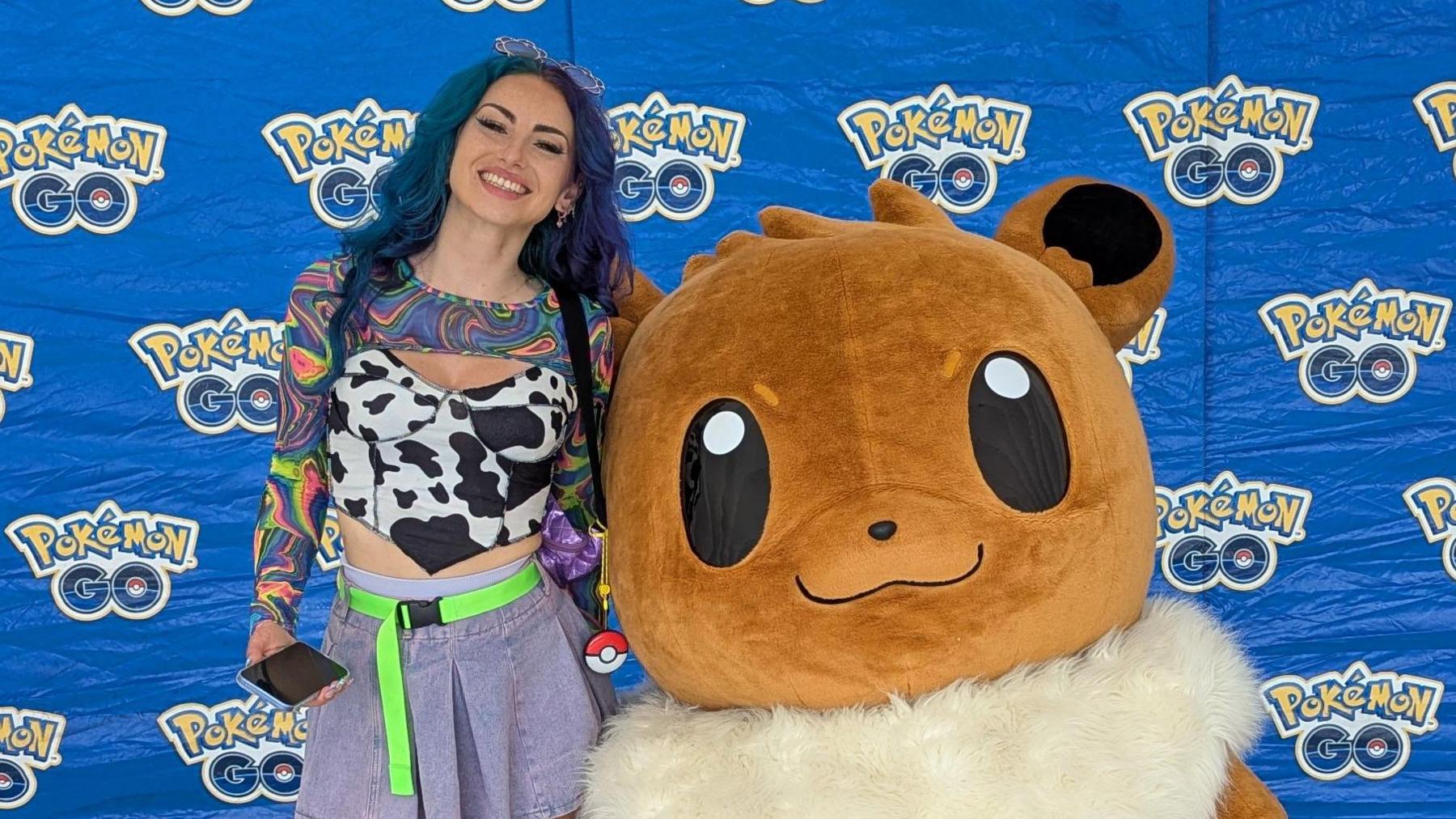 Image source, j0beats
J0beats (left) says her favourite Pokémon is Eevee
For some players, the game has also had an unexpected impact on their mental health.
Austin lives in Maine in the US and has been playing since 2017.
He told me before playing Pokémon Go it was "nearly impossible" to motivate himself to do anything, as he was feeling very anxious and depressed about life.
"When I went to my first raid meetup it was like a warm blanket," he said.
"As I held my phone and walked to the group of strangers in the park, I saw them look at me, and for the first time I wasn't nervous meeting this new group of people, I was actually excited and happy."
"From that day on that little voice telling me to stay in bed was put on mute."
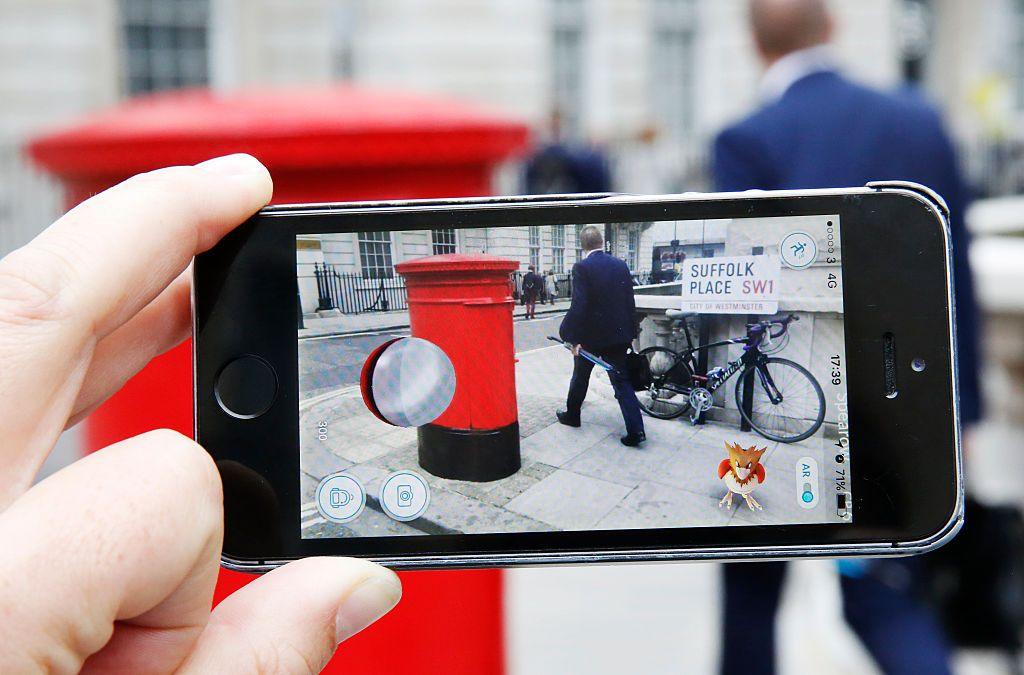 Image source, Getty Images
Over the years, the game has sometimes been a victim of its own hype and global appeal.
Police and safety groups once warned players not to become so engrossed in catching the next Psyduck that they got lost or put themselves in danger.
The game's immense popularity sometimes also meant "servers buckled under the strain", said Reynolds, meaning connectivity problems were "rife for some time".
And while the pandemic was seen as a boon for many in the video game industry, Steranka says the initial strict lockdowns "impacted Pokémon Go probably more than any other game out there".
The game later bounced back as restrictions eased and people once again looked for reasons to get outside.
Then in 2025, some fans questioned how the game's future might change when Scopely - which is itself owned by Saudi Arabia's Public Investment Fund, bought developer Niantic for $3.5bn (then £2.7bn).
"My hope is that we prove to players over time that this is definitively a good thing for the game and the community," Steranka says.
Looking ahead, Steranka says the focus for the game remains on community, memories and creating experiences families can share.
"No matter where I was and what phase of my life, Pokémon Go has been there for me," he says.
"It meets people where they are, at whatever phase of life they're in."